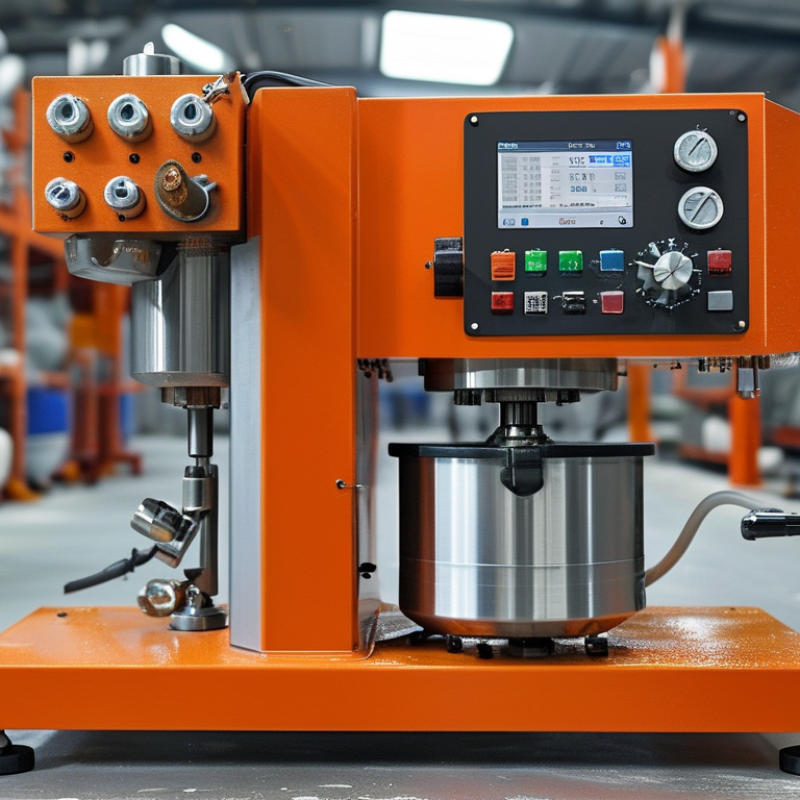
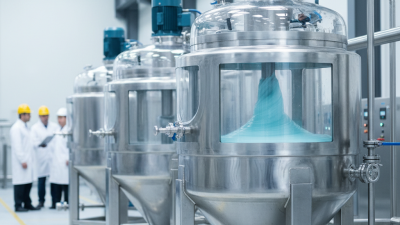
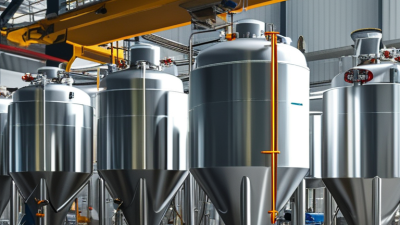
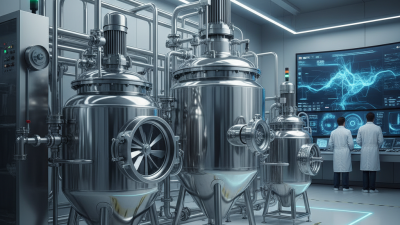
Global buyers entering the 2026 equipment market need more than impressive speed ratings. A High Speed Mixer must match the product, vessel, batch size, and production rhythm. A machine that performs beautifully in a laboratory may struggle beside a dusty, overheated factory floor.
Charles Ross, a long-time mixing-equipment authority, has often emphasized this practical principle: “The process determines the mixer, not the other way around.” That idea remains useful when comparing rotor-stator mixers, high-shear powder mixers, vacuum emulsifiers, and inline systems. Each type creates a different balance of shear, circulation, heat, and residence time. Buyers should examine measurable evidence, including particle-size results, viscosity changes, power consumption, cleaning time, and seal performance.
The 2026 market will likely reward suppliers that explain limitations honestly. Speed alone is not performance. It can also increase temperature, foam, noise, and maintenance pressure. Important details hide in plain sight. Check the impeller material. Inspect the control panel. Ask for trials using your actual formulation, not a convenient substitute. Request references from plants with similar operating conditions.
No ranking fits every factory. Even experienced buyers can overlook downstream filtration or operator training. That is where careful comparison matters. This guide introduces the leading High Speed Mixer types for global buyers, while recognizing an uncomfortable truth: the cheapest machine may become the most expensive choice after installation. Reliable decisions require technical records, transparent service terms, and a realistic view of daily production—not only a polished brochure.
2026 Top High Speed Mixer Types for Global Buyers
High-Speed Mixer Basics and Core Operating Principles
A high-speed mixer uses a rotating blade to transfer mechanical energy into a liquid or semi-liquid batch. The blade creates circulation, turbulence, and shear. These forces help disperse powders, break soft agglomerates, and blend ingredients more evenly. Rotor-stator mixers deliver intense local shear, while propeller and turbine designs provide stronger overall circulation. The correct choice depends on viscosity, solids content, batch size, and the required finish.
Speed alone does not guarantee good mixing. Blade diameter, tank geometry, clearance, and motor torque also control performance. A small blade running quickly may create a deep vortex but leave material near the tank wall. A larger blade can move more product at a lower speed. This often reduces air intake and temperature rise. The simple explanation is useful, but incomplete.
Experienced operators watch the batch, not only the control panel. They check torque changes, surface behavior, temperature, and powder wetting. A perfect vortex is not always desirable. Excessive air can cause foam, oxidation, or unstable filling. Test runs should measure mixing time and uniformity under realistic conditions. Engineers should also inspect guards, emergency stops, shaft seals, and cleaning access before production. Some recommendations may change after testing; process assumptions are worth challenging.
The chart compares typical maximum operating-speed bands used in industrial mixing. Rotor-stator and inline mixers create intense local shear through a narrow rotor-to-stator gap, while high-speed dispersers use a rotating disc to generate circulation and particle breakup. Planetary mixers operate more slowly but provide strong bulk mixing for high-viscosity materials. Powder-induction systems combine liquid circulation with controlled powder wetting and deagglomeration.
Typical engineering ranges shown for equipment selection; actual speed depends on impeller diameter, product viscosity, batch size, temperature, and process requirements.
Main High-Speed Mixer Types for Global Buyers in 2026
High-speed mixers are not interchangeable. Rotor-stator mixers create intense shear for emulsions, fine dispersions, and rapid wetting. High-speed dispersers use a toothed disc to break agglomerates in coatings, adhesives, and chemical slurries. Inline rotor-stator units support continuous production and reduce batch-to-batch variation. Planetary high-speed mixers handle viscous products, although their purchase and maintenance costs can be higher.
Grand View Research reports that the global industrial agitator market is expected to grow at about 5% annually through 2030. MarketsandMarkets also identifies automation, process control, and energy efficiency as major equipment priorities. These findings matter for buyers comparing motor power alone. A 30 kW mixer may outperform a 45 kW unit when its impeller, vessel geometry, and control system match the formulation. That detail is often missed.
Tips: Request viscosity curves, shear-rate data, noise levels, and cleaning procedures before purchasing. Ask for a factory trial using your actual powder and liquid. A supplier’s catalogue test may look impressive, but it can hide scale-up problems. Also check electrical standards, spare-part availability, and operator training in the destination country. Do not select the fastest machine automatically. Excessive shear can damage sensitive particles, raise temperature, and waste energy. The “best” type depends on product behavior, batch size, hygiene requirements, and future capacity. Mistakes still happen, especially when laboratory results are copied directly into production.
2026 Top High Speed Mixer Types for Global Buyers?
High speed mixers differ mainly in rotor design, flow path, and heat control. A rotor-stator mixer creates intense local shear through a narrow gap. It suits emulsions, pigments, and fine dispersions. An inline unit processes continuously and saves floor space. However, it needs stable feeding and careful pressure control. A saw-tooth disperser works well with powders and viscous coatings. It offers simpler maintenance, but may leave unblended zones in large vessels.
Performance depends on more than rated speed. A 10,000-rpm motor can lose efficiency when viscosity rises. Torque, impeller diameter, batch volume, and residence time matter equally. Speed alone misleads. In plant trials, temperature often increased faster than expected during extended mixing. Cooling jackets, intermittent operation, or lower tip speed may protect heat-sensitive ingredients. Vacuum-capable designs can reduce trapped air, especially in creams and sealants.
Material compatibility requires attention to every wetted surface, seal, and shaft coating. Stainless steel is common, but alloy selection should match acidity, chlorides, solvents, and cleaning chemicals. Abrasive powders can wear standard components quickly. Ceramics or hardened surfaces may last longer, though they can raise replacement costs. My early equipment comparisons focused too heavily on motor power. That was a mistake. A mixer with modest power may perform better when its geometry matches the product. Buyers should request trial data using their actual formulation, viscosity range, and cleaning method. Supplier documentation also needs independent verification.
| Mixer Type | Core Design | Typical Operating Range | Performance Characteristics | Best-Suited Materials | Main Applications | Key Advantages and Limitations |
|---|---|---|---|---|---|---|
| Rotor–Stator High-Shear Mixer | A close-clearance rotor rotates inside a stationary stator. The stator head creates intense shear, turbulence, and localized energy dissipation. |
Common rotor speed: approximately 3,000–10,000 rpm. Available in batch and inline configurations. |
Excellent for rapid dispersion, emulsification, deagglomeration, and particle-size reduction. It generally produces stronger local shear than a conventional propeller mixer. |
Good: low- to medium-viscosity liquids, emulsions, suspensions, pigments, and powders that can be wetted. Caution: abrasive solids can accelerate head and seal wear. |
Cosmetics, coatings, pharmaceuticals, food emulsions, inks, adhesives, and chemical formulations. |
Advantages: high shear, short processing time, compact mixing zone. Limitations: higher power demand, possible temperature rise, and limited suitability for very large solid particles. |
| High-Speed Disperser | A flat or toothed disc mounted on a vertical shaft generates a radial flow pattern and a high-shear zone around the disc edge. | Common speed range: approximately 500–3,000 rpm, depending on disc diameter, viscosity, and batch size. | Effective for wetting powders, breaking soft agglomerates, and dispersing pigments. It provides strong circulation but usually less fine emulsification than a rotor–stator head. |
Good: paints, coatings, inks, fillers, mineral slurries, and medium-viscosity pastes. Caution: not ideal for highly shear-sensitive products or very large hard particles. |
Paints and coatings, printing inks, sealants, construction chemicals, and composite materials. |
Advantages: simple construction, strong powder incorporation, scalable disc designs. Limitations: can introduce air, create vortexing, and require careful shaft positioning. |
| Inline High-Shear Mixer | A rotor–stator or similar high-shear head is installed in a recirculation loop or process pipeline rather than inside the main vessel. | Product flow is commonly selected by process throughput rather than rpm alone. Multiple passes may be used for difficult dispersions. | Provides consistent treatment when flow, pressure, and residence time are controlled. Suitable for continuous or semi-continuous processing. |
Good: pumpable liquids, emulsions, suspensions, and formulations requiring repeatable shear history. Caution: free-flowing dry powders and highly viscous, poorly pumpable products may require a different arrangement. |
Continuous emulsification, liquid blending, wastewater chemicals, food processing, and pharmaceutical solutions. |
Advantages: small process footprint, easy integration into automated lines, good batch-to-batch consistency. Limitations: requires suitable pumps, piping, seals, and pressure control. |
| Powder-Induction High-Shear Mixer | A high-shear rotor–stator creates a vacuum or low-pressure zone that draws powders into a liquid stream and disperses them below the surface. | Speed and powder-feed rate vary with powder properties, liquid viscosity, and required hydration time. | Reduces floating powder, dust, fisheyes, and lump formation. Particularly useful for difficult-to-wet powders and hydrocolloids. |
Good: gums, thickeners, starches, proteins, pigments, silica, and other fine powders. Caution: explosive or combustible powders require appropriate dust-control and hazardous-area engineering. |
Food and beverage, personal care, pharmaceuticals, water treatment, and specialty chemicals. |
Advantages: fast powder incorporation, reduced dust exposure, less surface buildup. Limitations: powder feeding must be controlled; high-viscosity products may need staged addition. |
| High-Speed Propeller Mixer | Uses an axial-flow propeller or pitched-blade impeller to circulate liquid through the vessel at relatively high speed. | Common speed range: approximately 300–3,000 rpm, depending on impeller diameter and vessel geometry. | Provides rapid bulk circulation and blending for low-viscosity products. It is generally less effective for fine particle-size reduction. |
Good: water-like liquids, solvents, low-viscosity chemicals, and easily soluble ingredients. Caution: can entrain air in shallow or poorly baffled vessels. |
Liquid blending, dilution, water treatment, low-viscosity chemicals, and cleaning formulations. |
Advantages: economical, simple, energy-efficient for bulk blending. Limitations: limited high-shear capability and weaker performance with viscous or heavily loaded suspensions. |
| High-Speed Turbine Mixer | Uses a radial-flow turbine, often with flat or curved blades, to generate intense circulation and localized shear. | Common speed range: approximately 500–3,000 rpm, selected according to viscosity, solids loading, and vessel diameter. | Offers a balance between bulk circulation and shear. It can disperse suspended solids and improve gas–liquid contact when properly configured. |
Good: low- to medium-viscosity liquids, slurries, suspensions, and gas–liquid systems. Caution: abrasive solids may require hardened or corrosion-resistant wetted parts. |
Chemical processing, mineral slurries, wastewater treatment, and reaction vessels. |
Advantages: robust hydraulic performance, good vessel circulation, flexible blade designs. Limitations: may require baffles and proper impeller clearance to avoid vortexing. |
| Dual-Shaft High-Speed Mixer | Combines a high-speed disperser or rotor–stator element with a slower anchor, paddle, or scraper shaft for simultaneous shear and bulk movement. |
High-speed shaft: commonly hundreds to several thousand rpm. Low-speed shaft: commonly approximately 10–100 rpm. |
Handles a wider viscosity range than a single high-speed shaft. The slow shaft continuously renews material at the vessel wall while the fast shaft disperses or deagglomerates. |
Good: medium- to high-viscosity pastes, filled sealants, adhesives, creams, gels, and coatings. Caution: requires accurate torque, seal, and clearance design. |
Adhesives, sealants, cosmetics, pharmaceutical creams, battery materials, and specialty coatings. |
Advantages: broad viscosity capability, improved wall sweeping, strong dispersion in thick products. Limitations: higher capital cost, more complex maintenance, and greater mechanical load. |
| Vacuum High-Shear Mixer | A high-shear mixing head operates in a sealed vessel under vacuum or reduced pressure to remove entrained air during processing. | Speed is selected according to the mixing head and product. Vacuum level depends on formulation, boiling point, and vessel design. | Combines dispersion or emulsification with deaeration. Reduced pressure can improve wetting and help remove bubbles from viscous products. |
Good: creams, lotions, gels, ointments, sealants, adhesives, and air-sensitive formulations. Caution: volatile solvents require condensation, explosion protection, and compatible vacuum equipment. |
Personal care, pharmaceuticals, medical materials, adhesives, and specialty chemicals. |
Advantages: lower air content, improved appearance, controlled evaporation, and cleaner final texture. Limitations: higher equipment cost and more demanding vessel, seal, and vacuum-system requirements. |
Note: Operating ranges are indicative industry ranges rather than universal specifications. Final selection should be based on viscosity, solids concentration, particle size, temperature, batch volume, shear sensitivity, required residence time, cleaning method, and applicable hygienic or hazardous-area standards.
2026 Top High Speed Mixer Types for Global Buyers?
How to Select the Right Mixer for Industrial Applications
Selecting a high speed mixer starts with the material, not the motor rating. A rotor-stator mixer suits emulsions, fine dispersions, and rapid particle breakup. A high-speed disperser works better for powders, pigments, and medium-viscosity liquids. Inline mixers support continuous production, while batch mixers allow easier recipe changes. Choose according to the real duty cycle.
Measure viscosity at processing temperature. Cold samples can mislead. Record solids loading, particle size, shear sensitivity, and required batch volume. Ask for heating, cooling, vacuum, or inert processing only when necessary. Excessive shear may damage polymers, cells, or temperature-sensitive additives. A larger motor is not always safer. A spreadsheet alone can mislead.
During trials, check mixing time, torque, temperature rise, foam, and cleanability. Use a representative vessel, impeller, and fill level. Small laboratory tests help, but scale-up can behave differently. That part is often underestimated. Review shaft seals, guarding, noise, electrical requirements, and documentation for the destination market. Request test records, maintenance instructions, material certificates, and spare-parts availability. Confirm that operators can access cleaning points without awkward tools. The best selection may still need adjustment after production begins. Real process data deserves the final word.
2026 Top High Speed Mixer Types for Global Buyers?
Global buyers should match the mixer type to the material, not marketing language. Rotor-stator mixers suit emulsions and fine dispersions. High-speed dispersers handle powders, pigments, and medium-viscosity liquids. Planetary mixers offer better control for thick pastes, but often require higher capital investment. IEA’s Energy-Efficiency Policy Opportunities for Electric Motor-Driven Systems reports that motor-driven systems consume about 43–50% of global electricity. Therefore, motor efficiency, load control, and batch size directly affect purchasing costs. A larger motor is not always safer or cheaper.
Safety documentation must be specific. Buyers should request risk assessments aligned with ISO 12100 and electrical compliance under IEC 60204-1. Guards, emergency stops, shaft interlocks, and grounding need physical verification. During factory acceptance testing, inspect vibration, noise, seal temperature, and restart behavior. Do not rely only on certificates. A clean-looking panel can hide weak maintenance access. In my experience, operators notice poor access before procurement teams do.
Total cost includes blades, seals, bearings, cleaning time, training, and spare-part availability. The U.S. Department of Energy’s motor-system assessments identify substantial efficiency savings through better sizing and controls, sometimes reaching 20–30% in suitable applications. Buyers should compare energy per batch, not motor horsepower alone. Request three-year maintenance records or realistic service assumptions. Some estimates remain optimistic. That deserves challenge. A mixer that saves ten minutes but causes difficult cleaning may increase labor costs over time.