Best Agitator Mixing Tank for Efficient Mixing Solutions?
In the world of industrial mixing, the "Agitator Mixing Tank" stands out as an essential tool. Experts like Dr. Emily Carter, a leading chemical engineer, emphasize its significance. She states, “An efficient agitator mixing tank can dramatically improve product quality.” This highlights the need for reliable mixing solutions in various industries.
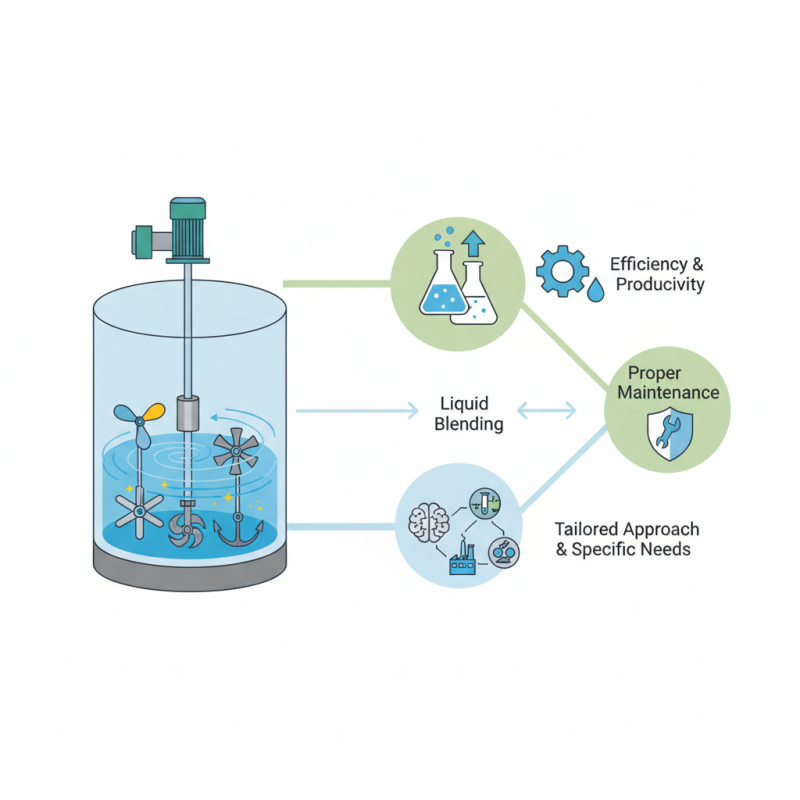
The design and technology behind agitator mixing tanks play a crucial role in achieving consistent results. Choosing the right type can impact efficiency and productivity. However, many facilities overlook the importance of proper maintenance. Without proper care, even the best tanks can underperform.
Different applications demand different mixing solutions. Some agitator mixing tanks excel in blending liquids while others are better for powders. Understanding these nuances is vital. Practitioners must consider their specific needs and challenges. Each situation is unique, warranting a tailored approach.
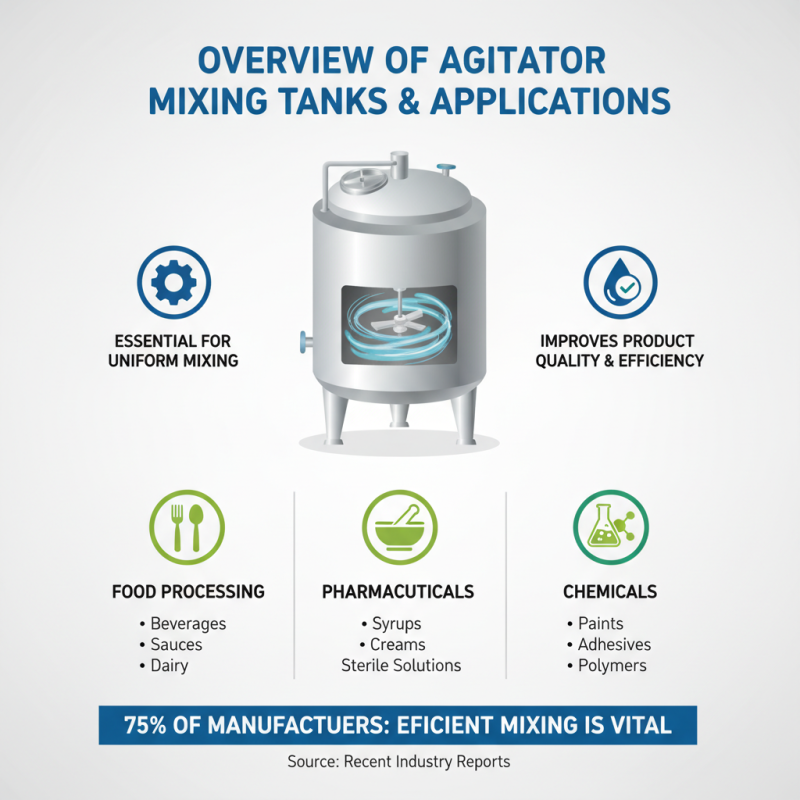
Overview of Agitator Mixing Tanks and Their Applications
Agitator mixing tanks are essential for various industries, including food processing, pharmaceuticals, and chemicals. Their design ensures effective mixing, promoting uniform distribution of ingredients. According to recent industry reports, 75% of manufacturers consider efficient mixing capabilities vital for their production lines. A well-designed agitator can significantly enhance process efficiency and product quality.
These tanks are versatile. They can handle liquids, solids, or a combination of both. Different agitation techniques, such as axial or radial flow, cater to specific needs. For instance, axial flow mixers are best for low-viscosity fluids, while radial flow mixers work well with high-viscosity materials. It is crucial to match the tank's design with the desired mixing process to achieve optimal results.
However, challenges exist. Not every tank is suitable for every application. Some may struggle with dead zones that lead to incomplete mixing. This can impact product consistency and lead to variations in quality. Addressing these issues requires careful assessment of mixing requirements and a deep understanding of the materials involved.
Key Features to Consider When Choosing an Agitator Mixing Tank
When selecting an agitator mixing tank, consider key features that influence performance. Mixing efficiency depends not only on tank size but also on the design of the agitator. According to a recent industry report, over 50% of mixing process issues stem from poor agitation. The right agitator can ensure uniform blending, reducing batch times significantly.
Tank material is another crucial factor. Stainless steel tanks are preferred for their durability and resistance to corrosion. A study indicated that tanks made from high-quality materials can improve lifespan by 30%. Additionally, the mixing speed and power are vital. Tanks operating with variable speed controls allow for customization based on specific mix requirements. This adaptability can lead to a 20% increase in productivity in varied applications.
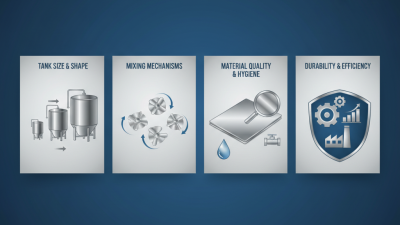
Consider the tank's capacity and geometry as well. Odd shapes can hinder mixing efficiency and lead to dead zones. Understanding fluid dynamics in relation to tank design is essential. An estimated 40% of mixing failures relate to improper tank shape. Therefore, it’s crucial to assess these considerations carefully and seek expert advice when needed.
Types of Agitators Used in Mixing Tanks and Their Functions
When it comes to mixing solutions efficiently, selecting the right type of agitator can significantly impact performance. Various agitators serve specific purposes in mixing tanks, and understanding these can lead to better process outcomes. For instance, turbine agitators generate high shear rates. They efficiently blend liquids with different viscosities and can also disperse solids into a liquid.
Another common type is the propeller agitator. Its design allows for quick mixing and is effective for low-viscosity liquids. However, it may struggle with dense mixtures, where other agitators excel. Magnetic agitators provide a unique option for small-scale applications. They reduce contamination risks and are great for sterile environments, but their blending power is limited compared to larger agitators.
It's essential to consider not just the design, but also the application. Each agitator’s function varies based on tank size, shape, and the material being mixed. Some designs may require more maintenance than others, leading to potential downtime. When selecting an agitator, understanding these nuances is crucial to ensuring efficient mixing.
Best Agitator Mixing Tank for Efficient Mixing Solutions
Comparative Analysis of Popular Agitator Mixing Tank Brands
In the world of industrial mixing, agitator mixing tanks are crucial for achieving uniformity in various processes. Recent industry reports reveal that nearly 70% of manufacturing facilities use these tanks for efficient mixing. However, the choice of equipment often hinges on specific applications, materials, and mixing requirements. Understanding the nuanced differences between popular brands can help operators make informed decisions.
A comparative analysis shows that factors such as tank geometry, impeller design, and material construction significantly affect performance. For example, tanks with pitched-blade impellers enhance circulation, making them suitable for viscous fluids. Conversely, flat-blade designs can achieve better mass transfer rates in lighter materials. Data suggests that mixing speed influences homogeneity; achieving optimal results often requires fine-tuning the agitation rate.
Moreover, many facilities overlook the importance of tank maintenance and design. Regular inspections can prevent downtime and ensure consistent mixing quality. Considering the variety of mixing tasks, no single brand is optimal for every scenario. Continuous evaluation of operational needs aligns better with achieving desired mixing outcomes. Reflecting on these aspects can provide insights for enhancing mixing efficiency in unique facility contexts.
Best Practices for Operating and Maintaining Agitator Mixing Tanks
Operating and maintaining agitator mixing tanks effectively requires attention to detail. Regular maintenance can ensure reliable performance and longevity. For instance, keep an eye on the agitator's RPM, as studies show that optimal mixing often occurs between 60 to 300 RPM, depending on the material. Deviating from these speeds can lead to inefficient mixing, resulting in inconsistencies in the final product.
Monitor the wear and tear on seals and gaskets. According to industry reports, replacing worn parts can prevent costly downtimes. It’s crucial to inspect these components often. Ensure that cleaning protocols are in place after each batch to minimize contamination risks. Ignoring this can lead to batch variations, affecting quality.
Tips: Regularly calibrate your mixing rates. A small adjustment can greatly enhance performance. Also, document maintenance activities. This creates a reliable history for troubleshooting. Always engage with team members about potential wear issues; proactive communication can prevent larger problems.