Leave Your Message
-
Phone
-
E-mail
-
Whatsapp
-
WeChat

Choosing among China’s top Cream Mixer Machine manufacturers is not just a price comparison. Buyers need to match the mixer to the product, batch size, and production routine. A thick cream can strain an undersized motor; a poorly shaped bowl may leave ingredients unmixed near the sides. Small details matter.
Food-engineering scholar R. Paul Singh is known for his work on food processing and engineering. This guide uses an editorial maxim inspired by process-focused food engineering, not a verbatim quotation: “Buy for the product, not the brochure.” It is a useful reminder when comparing supplier claims with practical details, such as mixing speed, bowl capacity, contact materials, cleaning access, and available service. Ask manufacturers for specifications and test information that fit your recipe. A polished product page is not enough.
The manufacturers featured in this guide are starting points for buyer research, not a guarantee that one supplier suits every factory. Compare machine configurations, customization options, delivery support, and references from similar applications. Request clear answers about installation and maintenance, too. Some comparisons will remain imperfect: published data may use different test conditions, and a demonstration may not reflect your exact cream. That is worth admitting. Careful questions, product trials, and written specifications can help buyers choose with greater confidence.
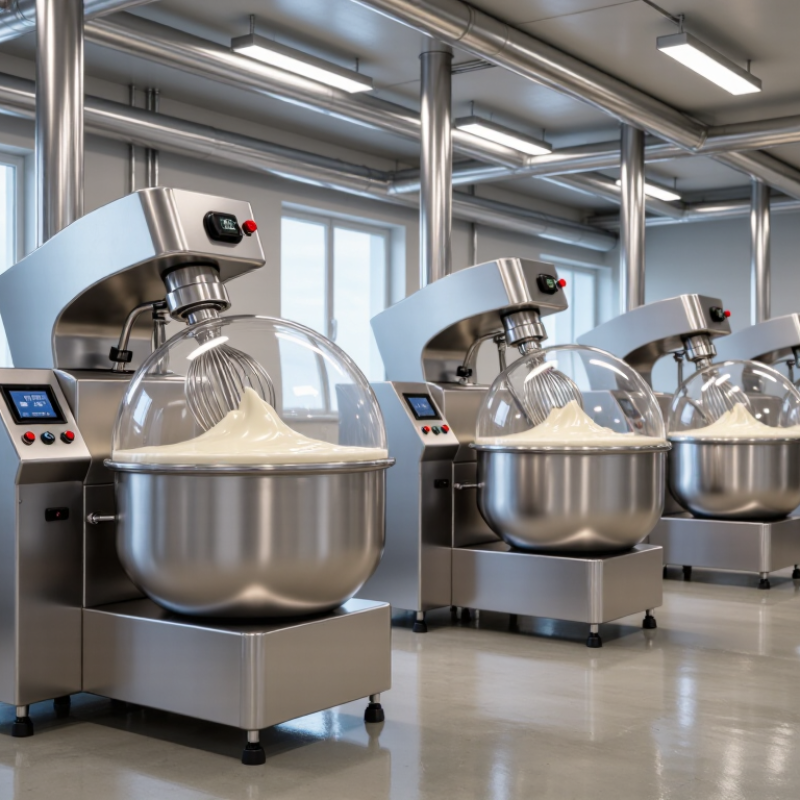
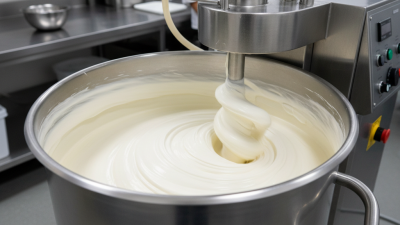
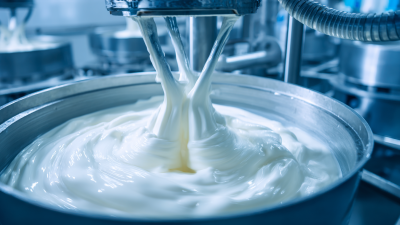
A cream mixer combines cream with ingredients such as sugar, cocoa, stabilizers, or flavorings. Depending on its design, it may also aerate the mixture or help keep solids evenly dispersed. Dairy plants use these machines for dessert bases, cultured cream, and whipped toppings. Bakeries and confectionery kitchens use them for fillings and toppings. The details matter: a jacketed tank can control temperature, while a scraper helps prevent thick cream from sticking to the vessel wall.
FAO’s Dairy Market Review 2024 estimates that global milk production reached about 965 million tonnes in 2023. The OECD-FAO Agricultural Outlook 2024–2033 projects continued growth in milk production over the coming decade. That is substantial. These figures describe milk, not mixer sales, but they show the scale of processing behind dairy products. Buyers should match mixer capacity to batch size, viscosity, and required mixing time—not just the vessel’s stated volume.
A mixer is not automatically a homogenizer. It may blend ingredients without producing the fine, stable emulsion a recipe needs. That distinction is easy to miss. For thick fillings, ask about variable speed, temperature control, cleaning access, and how consistently the machine handles small batches. Even a suitable machine can disappoint if operators overload it or skip careful cleaning. The specification sheet rarely tells the whole story.
| No. | Machine Type or Configuration | What It Does | Common Products and Uses | Key Buyer Consideration |
|---|---|---|---|---|
| 1 | Jacketed tank with anchor agitator | Circulates viscous material around the vessel and helps maintain an even temperature during mixing. | Pastry creams, custards, sauces, and other medium- to high-viscosity batches. | Check vessel geometry, heating or cooling requirements, and whether a wall scraper is needed. |
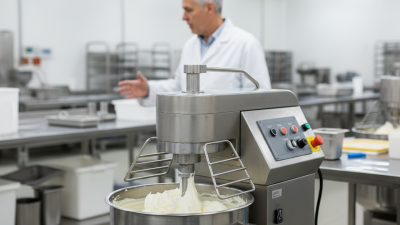
| 2 | Planetary mixer | Moves its mixing tool around the bowl while the tool also rotates, helping work through thick mixtures. | Bakery creams, fillings, icings, and small-batch confectionery mixtures. | Compare bowl capacity, tool options, speed control, and batch size; it is generally suited to batch processing. |
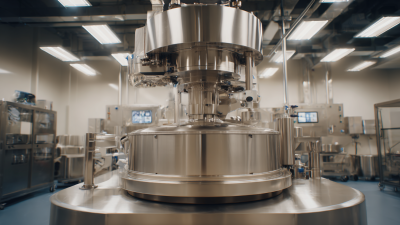
| 3 | Vacuum emulsifying mixer | Combines mixing and high-shear emulsification in a vessel that can operate under vacuum, helping reduce entrained air. | Cosmetic creams and lotions, as well as selected food emulsions when the machine is designed for food use. | Confirm the vacuum level, heating and cooling arrangement, cleaning method, and material compatibility. |
| 4 | High-shear rotor-stator mixer | Uses a rapidly rotating rotor and stationary stator to create intense local shear and disperse droplets or particles. | Emulsions, cream bases, sauces, and ingredient premixes that need fine dispersion. | Assess the required droplet or particle size, batch volume, viscosity, and whether the mixer is in-tank or inline. |
| 5 | Inline high-shear mixer | Processes product as it flows through a rotor-stator head, often as part of a recirculation loop or continuous line. | Continuous emulsification or dispersion of cream and sauce ingredients. | Match flow rate and pressure drop to the process; an inline mixer may require a separate tank agitator. |
| 6 | Scraped-surface mixer or agitator | Uses scraper blades to keep product moving along heated or cooled vessel walls, reducing buildup and improving heat transfer. | Heat-sensitive or viscous products such as custards, fillings, and some cooked cream preparations. | Check scraper material, vessel surface, temperature range, and suitability for the product’s viscosity and particles. |
| 7 | Dual-shaft mixer | Combines different agitation actions, commonly a slow anchor or sweep agitator with a separate high-speed disperser. | Viscous creams, gels, pastes, and formulations that need both bulk circulation and ingredient dispersion. | Review shaft arrangement, independent speed controls, vessel size, and access for cleaning and maintenance. |
| 8 | Powder-induction mixer | Draws powder into a liquid stream or mixing zone to help wet and disperse ingredients with less lump formation. | Powdered stabilizers, thickeners, milk ingredients, and other dry additions to cream or sauce bases. | Confirm powder feed method, dust-control needs, ingredient behavior, and whether additional batch agitation is required. |
| 9 | Batch emulsifying tank with propeller or turbine agitator | Provides general-purpose circulation and blending; a suitable impeller can help distribute liquid ingredients through a batch. | Liquid cream preparations, beverage creamers, sauces, and premixes with relatively low to moderate viscosity. | Choose impeller type and speed for the fluid’s viscosity and mixing goal; ordinary agitation alone may not create a fine emulsion. |
| 10 | Mixing tank with downstream homogenizer | Blends ingredients in a tank, then uses a separate homogenizer to reduce dispersed fat or oil droplets under pressure. | Dairy cream products and other formulations where a more uniform emulsion is required. | Specify the mixer and homogenizer as separate process steps, and verify pressure, capacity, product temperature, and cleaning requirements. |