How to Choose the Best High Shear Mixer Homogenizer?
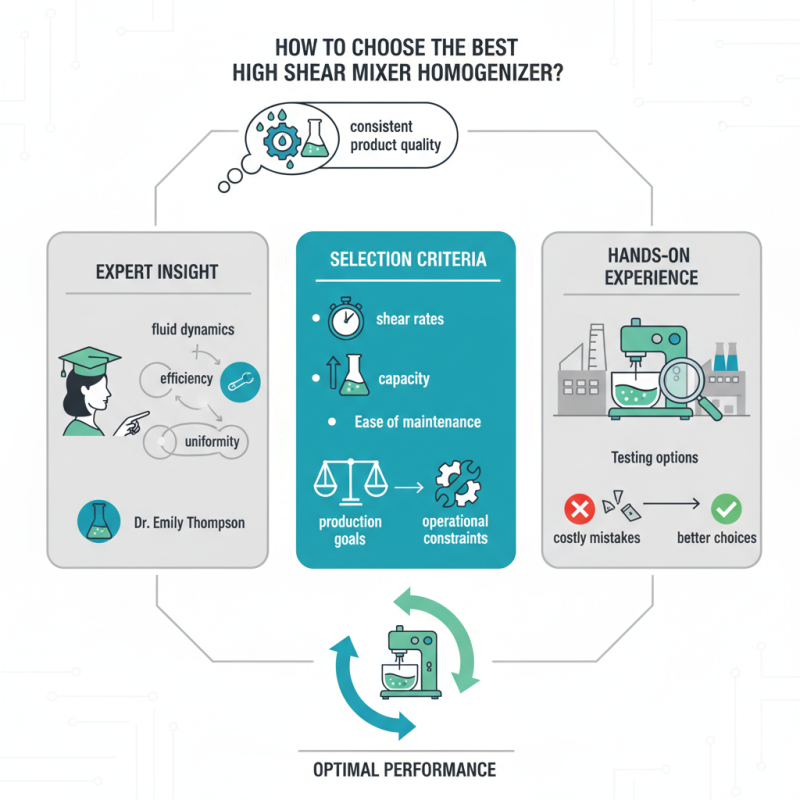
In the world of manufacturing, choosing the right equipment is crucial. A high shear mixer homogenizer is essential for achieving consistent product quality. According to Dr. Emily Thompson, a renowned expert in fluid dynamics, "Finding the right high shear mixer homogenizer can transform your production process." Her words resonate deeply in industries that prioritize efficiency and uniformity.
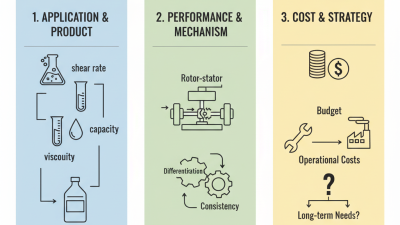
Selecting a high shear mixer homogenizer involves careful consideration. Different models offer various features tailored for specific applications. Factors like shear rates, capacity, and ease of maintenance must be analyzed. Not every machine fits all needs, and a mismatch can lead to inefficiencies. It’s vital to reflect on your production goals and operational constraints.
While expert advice helps, hands-on experience is invaluable. Testing options in real-world settings can reveal strengths and weaknesses not visible in specifications. Mistakes can happen; overlooking specifications or user requirements can be costly. Learning from observations in actual scenarios enables better choices in the long run, ensuring the selected high shear mixer homogenizer meets your operational demands.
Understanding the Role of High Shear Mixers in Homogenization
High shear mixers are critical in the homogenization process. They create uniform mixtures by breaking down particles and reducing the size of droplets or solids. This ensures a consistent texture and improves the quality of the final product. Understanding their role is essential for industries like food, pharmaceuticals, and cosmetics.
Effective homogenization relies on the design of the mixer. A powerful motor generates high speed and turbulence, allowing for efficient mixing. However, not all high shear mixers are the same. The choice depends on the material properties and desired outcome. It's vital to consider viscosity and particle size. In some cases, users overlook these factors, leading to suboptimal mixing results. This highlights the need for experimentation.
Operators should be trained to understand operational parameters. A deeper comprehension of shear rates, energy input, and processing time can enhance the mixing process. Mismanagement can lead to poor product consistency. Regular maintenance is also necessary to ensure reliable performance. Emphasis on these aspects can significantly improve product development and customer satisfaction.
Key Features to Consider When Selecting a High Shear Mixer
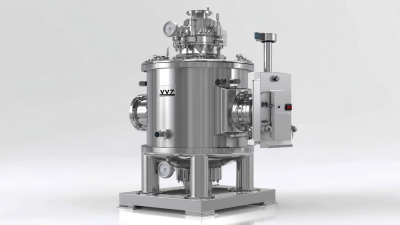
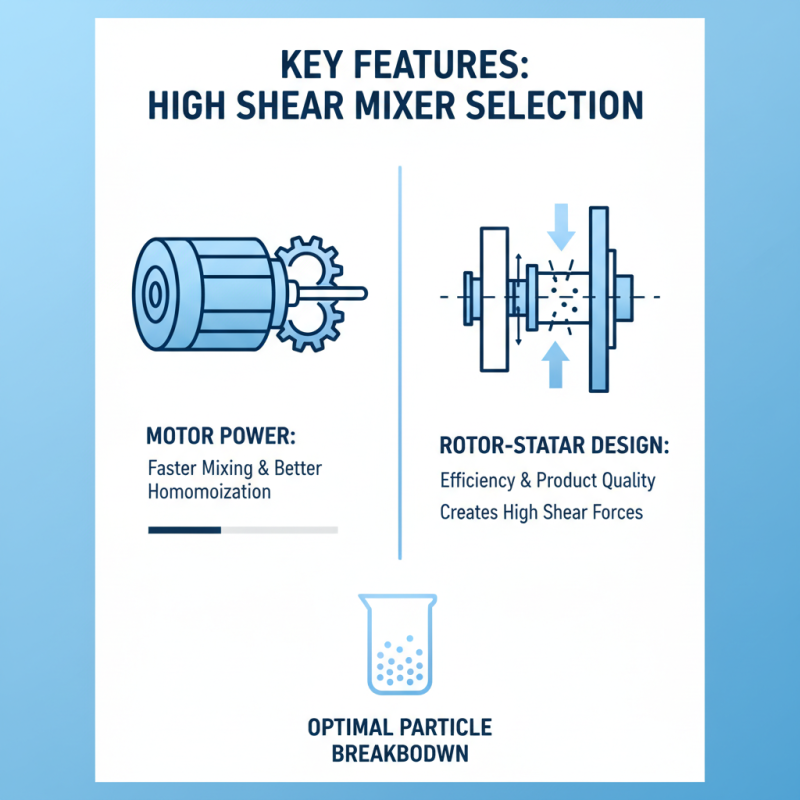
When selecting a high shear mixer homogenizer, there are several key features to keep in mind. The motor power is crucial. A powerful motor enables faster mixing and better homogenization. Pay attention to the rotor-stator design as well. This impacts the mixing efficiency and the final product quality. A well-designed rotor-stator assembly creates high shear forces, which are necessary for breaking down particles effectively.
The size and capacity of the mixer are important considerations too. It must meet your production requirements without compromising quality. A smaller mixer might suffice for lab-scale applications, while larger industrial operations require bigger models. Additionally, look for versatility in the mixer. It should handle different formulations, from viscous materials to low-viscosity liquids.
Another feature to evaluate is ease of cleaning and maintenance. Regular cleaning prolongs the mixer’s lifespan and ensures hygiene. The construction material also matters. Opt for corrosion-resistant materials, especially in food and pharmaceutical applications. Remember, a high shear mixer is an investment. Ensuring it meets your operational needs is vital. Consider consulting with industry experts for tailored advice.
Types of High Shear Mixers and Their Applications
High shear mixers homogenizers come in various types, each designed for specific applications. These mixers are essential in industries such as food, pharmaceuticals, and cosmetics. For instance, batch mixers are ideal for smaller quantities, while inline mixers excel in continuous processing. Understanding these types will help you make better decisions when selecting a mixer for your needs.
Batch mixers are versatile. They provide flexibility in production and work well for applications like emulsifying creams or sauces. However, they may not be efficient for large-scale operations. Inline mixers are streamlined, offering high efficiency and consistency, making them suitable for high-volume tasks like producing stable emulsions. Yet, their installation can require special considerations.
Disperser mixers also play a crucial role in achieving specific particle sizes. These mixers create a high-shear environment that breaks down materials effectively. Yet, choosing the right type isn't always straightforward. Each application has unique requirements. Evaluating your product's characteristics is vital. It’s essential to reflect on how each mixer aligns with your process needs.
Evaluating Performance Metrics for High Shear Mixers
When choosing a high shear mixer homogenizer, evaluating performance metrics is crucial. Key metrics include shear rate, flow rate, and energy consumption. A high shear rate ensures efficient mixing and emulsification. Meanwhile, flow rate affects the overall processing time, which can impact productivity. Users should consider their specific applications when analyzing these metrics.
Another important factor is the equipment's energy efficiency. Understanding energy consumption patterns is vital for long-term operational costs. Some mixers may appear powerful but can lead to excessive energy use. This aspect requires careful examination to avoid unnecessary expenses. Regular comparisons of performance metrics can help identify potential improvements.
Moreover, it's essential to reflect on the outcomes of past mixing processes. If results are inconsistent, reviewing the mixer’s performance is advisable. What could be optimized? Are there specific materials that don’t mix well? These reflections guide users towards better choices. Balancing performance metrics with practical reflections ensures an effective high shear mixer purchase.
Budget Considerations and Cost-Effectiveness in Mixer Selection
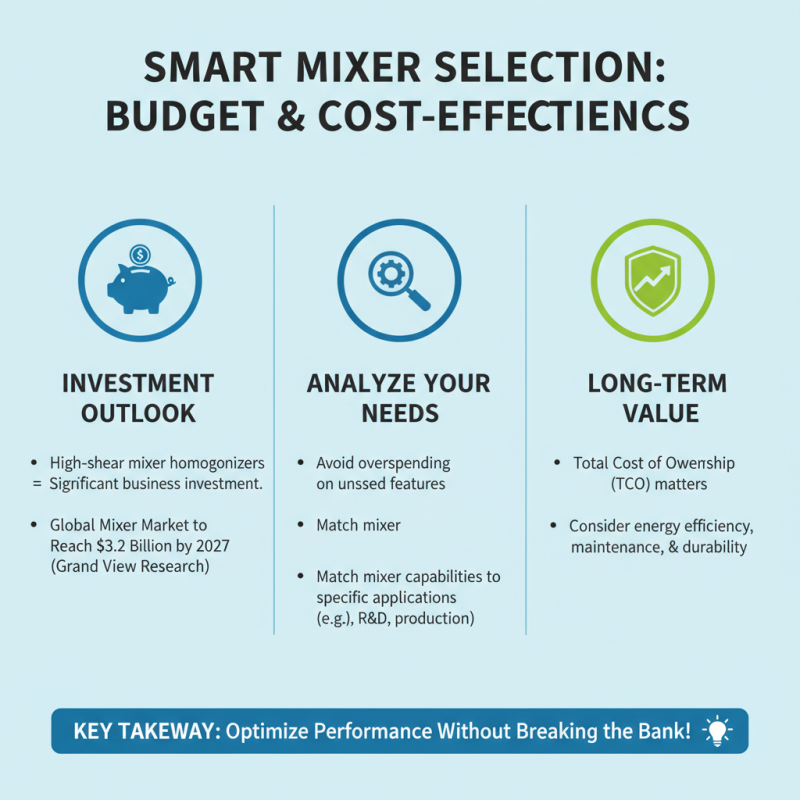
Selecting a high shear mixer homogenizer involves careful consideration of budget and cost-effectiveness. The purchase of such equipment is a significant investment for many businesses. According to a report by Grand View Research, the global mixer market is projected to reach USD 3.2 billion by 2027, emphasizing the growing demand for efficient mixing solutions. Companies need to analyze their specific needs to ensure they don’t overspend on features they may never use.
Cost-effectiveness should not solely focus on the initial purchase price. Operating costs, maintenance, and energy consumption can significantly impact overall expenses. A study by MarketsandMarkets highlighted that energy-efficient systems can reduce operational costs by up to 30%. While it may be tempting to choose cheaper models, businesses should consider potential hidden costs related to performance and durability. Some low-cost mixers may require frequent repairs, leading to higher long-term expenses.
Industry experts suggest evaluating total cost of ownership (TCO) rather than upfront price alone. TCO considers all costs associated with the mixer, including maintenance and efficiency. It’s essential to prioritize quality and reliability to avoid costly downtimes. Choosing a high-quality mixer may seem more expensive initially but can lead to savings in the long run. Balancing budget considerations with these factors is critical for informed decision-making.