Top 10 High Shear Mixer Homogenizer Manufacturers
A High Shear Mixer Homogenizer can turn powders, liquids, and oils into a stable, uniform batch. In practice, the difference shows up in the tank: fewer visible clumps, consistent texture, and predictable processing time. Yet a machine’s results depend on more than rotor speed. Product viscosity, batch size, temperature, and cleaning requirements all shape performance.
Industry reports offer useful context, but they cannot verify a supplier’s claims by themselves. PMMI’s 2024 State of the Industry report discusses automation and operational pressures affecting processing and packaging manufacturers. The OECD-FAO Agricultural Outlook 2024–2033 examines changing food production and consumption patterns. Together, these sources highlight why processors value adaptable equipment and dependable production. They do not establish which mixer is best for every application. That matters.
This Top 10 High Shear Mixer Homogenizer Manufacturers guide compares companies through practical criteria: mixing technology, available capacity, application experience, service support, and documented specifications. Buyers should also check material compatibility, cleaning access, and whether test results reflect their actual formulation. A polished brochure is not a plant trial. Rankings simplify a complicated choice, and that is an imperfect approach. Still, a clear comparison can help engineers shortlist suppliers before requesting trials, drawings, and references. The right partner should explain trade-offs plainly, not promise identical results for every product.
Understanding High Shear Mixer Homogenizers and Their Core Functions
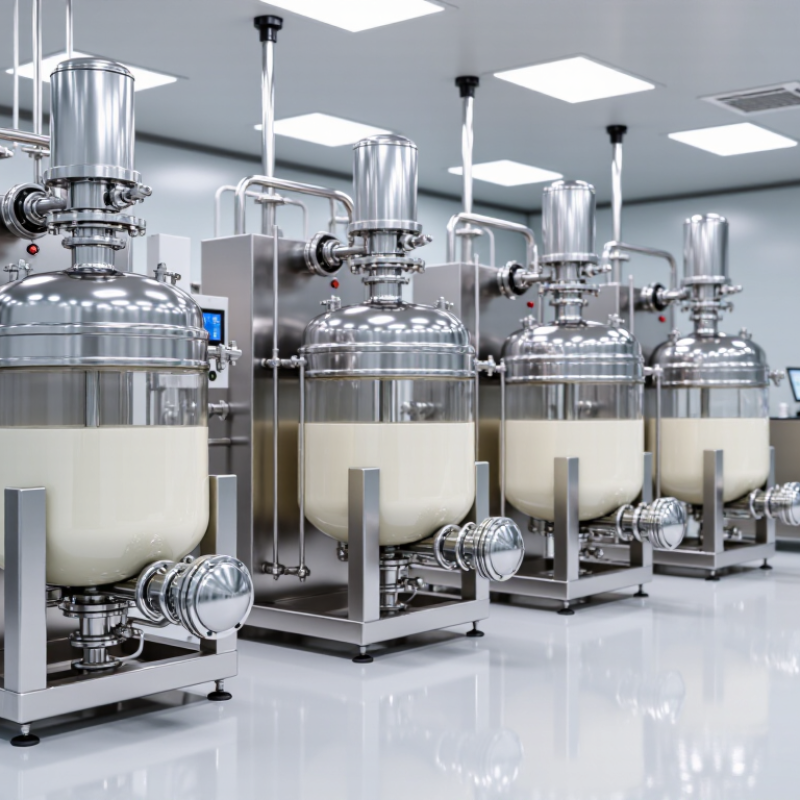
A high-shear mixer homogenizer uses a fast rotor and stationary stator to draw liquid through a narrow gap. The rotor creates intense local shear, breaking droplets or soft agglomerates into smaller units. Repeated circulation helps distribute ingredients through a batch. Small gaps matter. So do flow rate and residence time. These machines support emulsification, dispersion, and wetting, but they do not solve every formulation problem. Heat can build quickly, and sensitive ingredients may lose stability if temperature is ignored.
Grand View Research’s 2024 food-processing equipment market analysis valued that global market at USD 58.3 billion in 2023. It projected a 5.8% compound annual growth rate through 2030. This broad market figure is not a mixer-sales estimate, but it reflects investment in processing capacity. In production, operators track temperature, batch time, viscosity, and particle-size distribution. A cream can look smooth while measurements still reveal coarse droplets. That mismatch may affect storage stability. Rotor speed alone is not a complete specification. Scale-up can change flow patterns, and a setting that works in a small vessel may disappoint in a larger tank. Test the actual formulation.
Key Factors for Evaluating Homogenizer Manufacturers
Evaluating a high shear mixer homogenizer manufacturer takes more than comparing motor power or advertised capacity. Ask how the machine performs with materials like yours, at your target batch size and viscosity. A useful supplier can explain rotor-stator geometry, tip speed, temperature rise, and how these affect droplet or particle size. Request test data with stated conditions, not just a polished result. Small details matter.
Check whether wetted parts, seals, and surface finishes suit your process and cleaning routine. Ask for drawings, material certificates, and clear guidance on maintenance intervals. If possible, run a sample batch and record mixing time, temperature, and consistency across several runs. One good batch proves little. Repeatability matters more. A manufacturer should also explain installation needs, spare-part availability, operator training, and response times for technical support. These answers reveal how well the equipment will fit daily production, not only a demonstration.
Be cautious when specifications appear unusually broad or when performance claims lack test conditions. A larger motor does not automatically produce finer emulsions; formulation, flow pattern, and processing time also matter. Compare quotations using the same vessel volume, product properties, and acceptance criteria. I have seen evaluations focus heavily on purchase price, then overlook cleaning access or seal replacement. That is easy to miss. Ask what the supplier cannot guarantee, too; a candid limitation can be more useful than a perfect-sounding promise.
How High Shear Mixer Homogenizers Differ by Design and Application
High-shear mixer homogenizers differ less by name than by rotor geometry, operating speed, and flow path. A rotor-stator head pulls material through narrow clearances, where intense shear breaks droplets and soft agglomerates. In a batch vessel, the head works in one tank; an inline unit processes product as it passes through a chamber. The choice affects throughput, cleaning, and how consistently each batch is treated.
Application matters. Creams and sauces may need fine, stable droplets, while powders added to liquids need effective wetting without dry clumps. Viscous products can demand more torque, and sensitive ingredients may need temperature monitoring because shear creates heat. Scale-up takes care. A larger motor alone does not guarantee the same result; vessel shape, head position, and circulation all matter. The best choice is not always the most powerful unit. There are trade-offs.
Tips: Match the mixer to the material’s viscosity and target particle or droplet size. Check whether the process is batch or continuous, and ask how performance will be verified. Record temperature and processing time during trials. A small test can reveal problems, but it may not capture full-scale flow. That part deserves a second look.
How High-Shear Mixer-Homogenizer Designs Differ by Application
The chart maps common design roles: batch rotor-stator mixers process material in a vessel, inline rotor-stator mixers handle continuous flow, and high-pressure homogenizers use pressure-driven flow for fine droplet or particle-size reduction. A value of 1 indicates a typical role; 0 means it is not the design’s primary role, not that the task is impossible.
Profiles of Ten High Shear Mixer Homogenizer Manufacturers
Top 10 High Shear Mixer Homogenizer Manufacturers
Profiles of Ten High Shear Mixer Homogenizer Manufacturers
These ten profiles describe common manufacturer strengths, not a ranked list. A broad-line equipment maker may offer both batch and inline machines for varied production scales. A rotor-stator specialist focuses on rapid dispersion, with rotor speed and head design matched to the material. A batch-mixer producer suits vessels where operators need direct access for charging and cleaning.
Small details matter.
A sanitary-process manufacturer designs smooth product-contact surfaces and accessible seals for frequent washdowns. A validation-focused supplier may provide material records, test documents, and traceable configuration details. A pilot-plant specialist offers compact units that help teams test recipes before scaling up. A high-viscosity equipment maker emphasizes torque, heat management, and stable circulation.
These are not interchangeable strengths.
A powder-induction specialist helps draw dry ingredients into liquid while limiting floating clumps. A custom-engineering firm adapts connections, controls, and mixer geometry to an existing line. A service-oriented regional maker may stand out through local commissioning and access to replacement parts. Ask for test results using a representative sample; a glossy specification sheet cannot reveal every processing issue. Check cleaning access, operating temperature, and expected maintenance intervals. Even a well-matched mixer may need trials, and that uncertainty deserves honest attention.
Industries and Processes Served by Leading Manufacturers
High-shear mixer homogenizers serve food, pharmaceutical, personal-care, and specialty-chemical production. In food plants, they disperse powders into liquids, reduce oil droplets in dressings, and help stabilize sauces.
A practical test is whether the batch stays uniform after pumping and storage, not merely whether it looks smooth in the tank.
The OECD-FAO Agricultural Outlook 2024-2033 projects global agricultural and fish production to grow about 1.1% annually over the decade. That is useful context, not a direct forecast of mixer demand.
Pharmaceutical manufacturers use controlled mixing to prepare suspensions, creams, and other formulations, where reproducibility and cleanability matter. IQVIA’s The Global Use of Medicines 2024 projects global medicine spending will exceed $2.3 trillion by 2028, measured at list prices. The figure signals industry scale, but does not show how much equipment will be purchased. In cosmetics, homogenizers help create lotions with fine, even textures; chemical processors may use them to disperse pigments or additives.
Small details count.
Batch size, viscosity, temperature, and cleaning requirements can change equipment selection. One weak assumption persists: higher speed alone does not guarantee better product quality. Manufacturers should validate the process with real materials and documented trials.