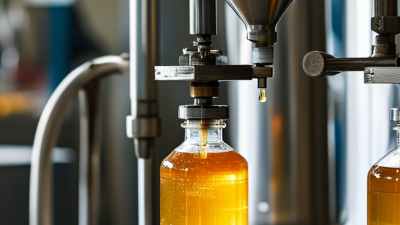
Across beverage, food, household-care, and personal-care production, filling is where speed meets accuracy. An underfilled bottle can require rework; a dripping nozzle leaves sticky residue near the conveyor. Neither issue looks dramatic on one unit, but both can compound across a shift. That pressure is real.
Deloitte and the Manufacturing Institute estimate that up to 1.9 million U.S. manufacturing jobs could go unfilled by 2033. The International Federation of Robotics reported 4,281,585 industrial robots operating worldwide in 2023, a 10% year-over-year increase. These are broad manufacturing indicators, not filling-machine sales figures. Still, they show why manufacturers are examining automation and production consistency.
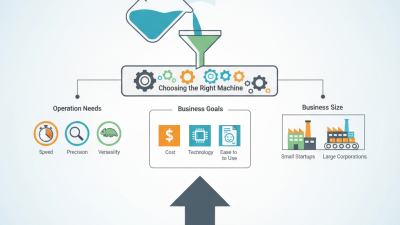
Liquid Filling Machines can help control dose volume, reduce manual handling, and maintain a steady line rhythm. The right system depends on the liquid, container, target output, and cleaning requirements. A thin beverage behaves differently from a thick lotion. A narrow bottle neck may need a different nozzle setup than a wide jar. Operators also need practical controls, accessible change parts, and settings they can repeat between production runs.
The benefits are not automatic. A machine mismatched to the product can cause foaming, drips, or lengthy changeovers. Even a capable filler needs correct setup and routine checks. Choosing well means weighing accuracy, throughput, flexibility, and maintenance—not simply buying the fastest unit.
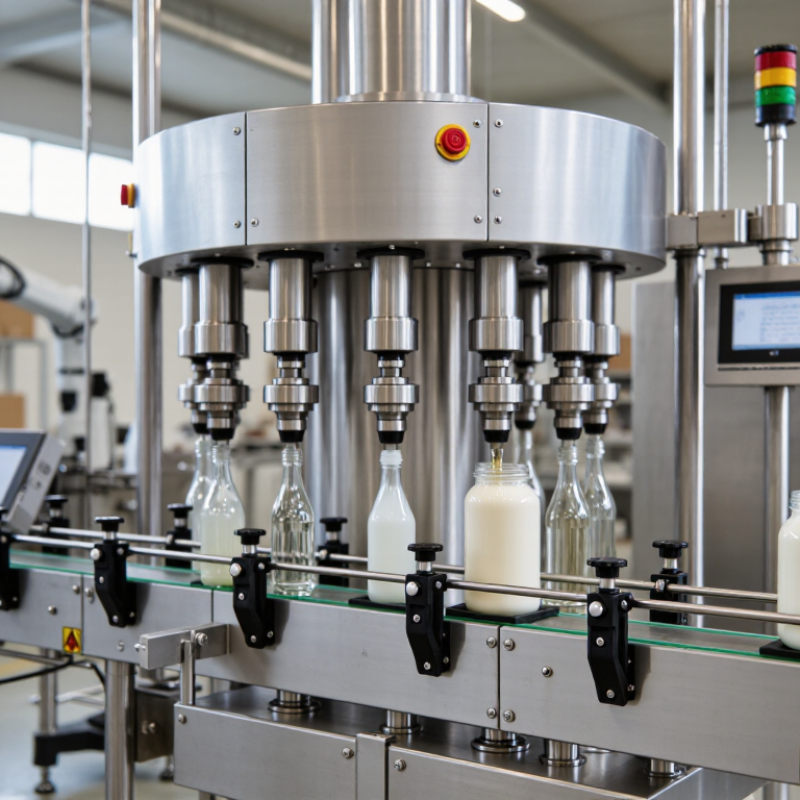
A filling machine’s metering system affects accuracy, speed, and product handling. Piston fillers measure a set volume with each stroke. They often suit thicker products, such as syrup or lotion. A change in piston stroke can adjust the dose. However, very chunky mixtures may not move consistently through the cylinder. Test the actual product, not just water.
Pump fillers move liquid through a controlled pumping cycle. Depending on the pump design, they can handle different viscosities and container sizes. Flow-meter systems measure liquid passing through a line and stop at a programmed target. They can work well with free-flowing products, but bubbles, temperature shifts, or changing line pressure may affect readings. Small details matter.
Tips: Run several test fills at your normal operating speed. Check containers from the start, middle, and end of a run. Record fill weights or volumes, then repeat after cleaning or changing settings. Don’t assume one successful test proves long-term accuracy. Product behavior can change during a shift, and that deserves a closer look.
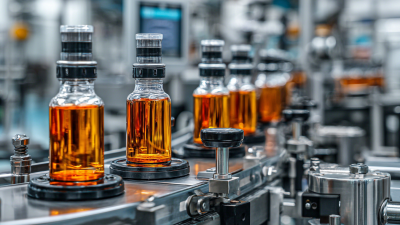
Why Choose Liquid Filling Machines for Your Business?
The right filling method depends on how a product behaves, not just its label. Thin liquids, such as water-like cleaners, may suit gravity or time-pressure filling. Thick sauces and creams often need piston or servo-driven systems to move steadily. A small temperature change can alter viscosity, so test the product at its actual filling temperature. Foam changes everything. For foaming liquids, slower flow and bottom-up nozzles can reduce bubbles and spills.
Products with seeds, pulp, or other particles need clear, generous flow paths. Narrow valves may clog, while aggressive pumping can damage delicate pieces. Match the pump and nozzle to particle size, then check whether the fill remains consistent across repeated cycles. Container shape matters too. A narrow-neck bottle may need a slim nozzle; a wide jar gives more room but can still splash. Plastic, glass, and flexible pouches may also respond differently to pressure and handling.
Test it first. A short production-style trial can reveal drips, foam, uneven fill levels, or awkward bottle positioning. Do not rely only on a sample poured by hand; machine speed changes the result. Even a good setup may need adjustment after the first run. Record fill weights, cycle times, and cleanup needs, then refine the settings with real containers and product.
| Product or packaging condition | Common examples | Filling technology to consider | Why it may be suitable | Key checks before selection |
|---|---|---|---|---|
| Low-viscosity, free-flowing liquid | Water, juice without pulp, thin cleaning solutions | Gravity, timed-flow, or overflow filling | These methods can handle liquids that flow readily. Overflow systems can help achieve a visually consistent fill level in compatible containers. | Confirm the liquid’s flow behavior, required fill accuracy, container opening, and whether a level appearance or precise volume is the priority. |
| Foaming or aeration-prone liquid | Shampoo, detergent, some soaps and beverages | Diving-nozzle filling with controlled flow; an overflow system may also suit some applications | A nozzle that fills from near the bottom upward can reduce splashing and help manage foam. Slower or staged flow may further limit turbulence. | Test the actual product and filling speed. Foam behavior can change with temperature, nozzle design, drop height, and container shape. |
| Medium- to high-viscosity liquid | Sauces, lotions, gels, syrups, creams | Piston filler or a suitable positive-displacement pump | Positive-displacement systems move a measured amount of product and are often better suited to thicker liquids than simple gravity filling. | Viscosity alone is not enough to choose equipment: check temperature sensitivity, shear sensitivity, suction behavior, and the required dose range. |
| Liquid containing suspended particles | Chunky sauces, pulpy drinks, products with seeds or inclusions | A product-compatible piston or pump system with suitably sized product passages | Larger, unobstructed passages can help reduce clogging and damage to particles during transfer. | Specify the largest particle size, particle concentration, and fragility. Verify valves, hoses, nozzles, and cleanout access with product trials. |
| Small-dose or sensitive product | Fragrances, laboratory liquids, specialty oils | Peristaltic or precision pump filling, depending on product compatibility | Peristaltic systems keep product contact largely within the tubing, which can simplify changeovers for compatible applications. Other precision pumps may suit different flow properties. | Check tubing or wetted-part compatibility, dose accuracy at the intended speed, cleaning requirements, and whether the product is sensitive to shear or air exposure. |
| Different container shapes or sizes | Bottles, jars, cans, and other rigid containers | A filling machine with suitable guides, change parts, and adjustable nozzle positioning | Adaptable handling components can support more than one container format, subject to the machine’s design and changeover requirements. | Compare container dimensions, opening size, stability, material, target fill volume, and the time needed to switch formats. |
| High-accuracy or variable-density filling | Products where fill mass is important or density varies between batches | Net-weight filling system | The system measures product by weight, which can be useful when a weight-based target is required instead of relying only on a volume setting. | Assess target weight, scale range, line speed, container tare handling, and the effects of vibration or product flow on weighing stability. |
Selection note: Viscosity ranges and machine suitability depend on product formulation, temperature, container geometry, target accuracy, and production speed. Validate the proposed configuration with representative product and containers before purchase.
A liquid filling machine can make output more consistent, but accuracy depends on setup, product, and maintenance. For packs marked between 100 and 200 mL, the EU tolerable negative error (TNE) reference is 4.5 mL. Treat this as a benchmark, not a fill target. A pack should not routinely sit near the lower limit.
For example, a 150 mL bottle needs a stable fill across the production run, not just one accurate reading. Product temperature can change viscosity, while foam or dripping may affect the measured result. A suitable machine lets operators adjust fill volume and repeat settings. Some systems use timed flow; others meter by volume or weight. The best choice depends on the liquid and container.
Check samples at start-up and during production. Record results, and verify measurement tools with a suitable calibration routine. If weighing is used, account for product density when comparing results with a volume-based label. Small differences matter. A machine alone does not guarantee compliance, and the 4.5 mL figure should not replace checking applicable rules for the product and pack. It is tempting to optimize every setting around that number; that can leave too little room for normal variation. Regular nozzle checks help, though they can be easy to overlook.
EU TNE benchmark for 100–200 mL packs: 4.5% of nominal quantity (4.5 mL at 100 mL).
The chart shows the EU tolerable negative error (TNE) calculated at three nominal fill volumes. TNE is a regulatory tolerance, not a recommended filling target or a measure of machine performance. Consistent filling helps businesses manage product giveaway and support quantity control.
A filler’s rated speed is only a starting point. Compare good units per hour, not the number on the machine’s nameplate. Run a trial with your actual liquid, bottle, cap, and target fill volume. Record slowdowns, rejects, and operator adjustments. One awkward truth: a faster filler can simply move the bottleneck to the capper or labeler. Time changeover from the last saleable unit to the first stable unit of the next product. Include draining, parts swaps, flushing, and restart checks. A 2024 Deloitte–Manufacturing Institute workforce study estimated that U.S. manufacturing may need 3.8 million workers by 2033, with 1.9 million jobs potentially unfilled. That is not a filling-line forecast. Still, fewer difficult adjustments can ease staffing pressure.
Cleaning deserves its own timed test. Ask operators to clean the most challenging product residue, then inspect hard-to-reach areas around valves, nozzles, and seals. Record water, detergent, labor, and downtime—not just the advertised cleaning cycle. For clean-in-place systems, confirm that the recipe and sensors cover your actual product and soil conditions. For manual cleaning, check whether parts can be removed and reassembled without tools or guesswork. Keep the test modest. A single successful wash may not reflect a rushed night shift, or a worn seal. That’s worth checking.
For food production, 21 CFR Part 117 sets requirements for current good manufacturing practice, hazard analysis, and risk-based preventive controls. A liquid filling machine can support these controls, but it cannot ensure compliance by itself. Check whether product-contact surfaces are suitable for the product, accessible for cleaning, and designed to reduce contamination risks. Watch the filler nozzle, seals, and tubing. Residue can hide there.
For drug manufacturing, 21 CFR Part 211 covers finished pharmaceutical cGMP, including equipment suitability, cleaning, maintenance, and production records. Select a filler that allows consistent, measurable filling and supports documented setup, inspection, and cleaning procedures. Calibration matters. So does traceability. Keep records of maintenance and relevant process checks, and assess whether cleaning procedures work for the actual product and equipment configuration. Requirements depend on your operation and product; a food line and a drug line are not interchangeable. It is easy to focus on speed and overlook cleanability. That deserves a second look. Consult qualified regulatory and quality professionals to determine which provisions apply and how your equipment fits into the facility’s controls.