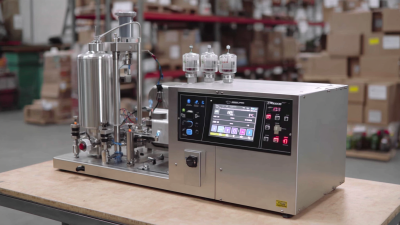
Aerosol filling lines look tidy in brochures: stainless-steel frames, orderly valves, and bright control panels. In daily production, the details matter more. Fill accuracy, changeover time, product-contact materials, and access to service can shape a line’s performance. This guide introduces seven leading suppliers of Aerosol Filling Machinery worldwide, with attention to their equipment ranges and practical fit.
Quality expert W. Edwards Deming said, “Quality is everyone’s responsibility.” That principle applies to filling equipment, too: performance depends on machine design, installation, operator training, and maintenance. A supplier’s technical documentation and support deserve as much scrutiny as its headline speed. Faster is not always better.
The comparison considers different production needs, from compact operations to higher-volume lines. It also asks useful questions: Can the equipment handle the intended container sizes? Are changeovers straightforward? Is technical support available when a line stops? Specifications should be checked against each manufacturer’s current documentation; capabilities vary by model and configuration.
No supplier is perfect. A polished demonstration cannot answer every factory-floor question, and this overview is a starting point, not a substitute for a technical review. Use it to identify candidates, compare requirements, and prepare sharper questions before requesting quotations.

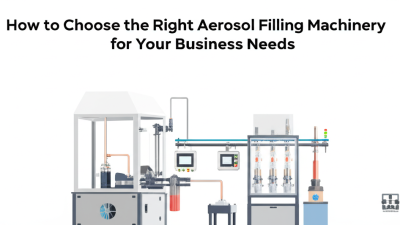
An aerosol filling line is a connected sequence, not just a filling machine. Empty cans enter through a feeder, where guides keep them upright and evenly spaced. A practical supplier should explain how the feeder handles different can sizes and what adjustments operators make during changeovers. Sensors can detect jams or missing cans, but they still need sensible placement and routine checks. Small misalignments matter.
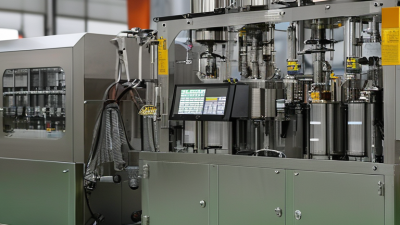
Filling comes after cans are positioned; the product and propellant are measured according to the process specification. Stable dosing helps limit variation between cans. Temperature, viscosity, and line speed can affect results, so trial runs with representative materials are valuable. Crimping then secures the valve to the can. The crimp must be consistent, not merely fast. Testing may include checking fill weight, valve function, and leaks, with methods selected for the product and equipment. Ask suppliers how test results are recorded and how rejected cans are separated. A polished demonstration is useful, but production conditions are less tidy. No line runs itself. Operator training, accessible maintenance points, and clear fault instructions matter just as much as headline output rates.
7 Best Aerosol Filling Machinery Suppliers Worldwide: Comparing Real Production Metrics
Compare quoted cans per minute with sustained output, not a brief demonstration run. Ask suppliers to test your actual can diameter, height, valve, and formulation. Record rejects, stoppages, and changeover time during the trial. Real output matters. A line rated at 120 cans per minute may deliver less when operators adjust for small cans or frequent size changes. A neat spreadsheet can still mislead.
Fill accuracy needs a defined measurement method. Ask whether the figure refers to product mass, propellant dose, or finished-can net contents, and request sample results across a full production run. OIML R 87:2016, Table 2, sets a tolerable deficiency of 4.5 g for prepackages with nominal quantities from 50 to 100 g. This is a metrology reference, not a recommended machine tolerance. Set a tighter operating target where the product and measurement system require it.
For can-size flexibility, compare the supplier’s stated minimum and maximum diameter and height with your own specifications. Confirm which parts need changing, how long changeovers take, and whether each format needs separate validation. Ask for test records at both ends of the size range. Then check whether accuracy and speed remain stable. Some buyers overlook this detail. A broad size range on paper does not prove reliable performance across every format.
Typical aerosol-line capacity ranges by configuration. These are broad industry planning ranges, not specifications for individual suppliers or guarantees of production output.
How to compare: Confirm rated and demonstrated cans per minute for your product and shift conditions. Compare fill accuracy using the supplier’s stated tolerance and a production trial with your formulation. Check that the machine accommodates your can diameter, height, valve, and container format; compatible sizes vary by model and tooling.
Aerosol filling machinery must be assessed against the risks of the product, process, and installation site. In the European Union, Directive 75/324/EEC sets requirements for aerosol dispensers, including pressure resistance, testing, and labeling. Buyers should ask how a machine supports controlled filling, leak checks, and traceable production records. A document alone is not enough.
ATEX matters where an explosive atmosphere may occur. It concerns equipment and protective systems used in defined hazardous areas, so request the supplier’s risk assessment and confirmation that components suit the site classification. Look closely at motors, sensors, electrical enclosures, and grounding points. Small details matter. A machine’s suitability depends on how it is installed and operated, not just on its nameplate.
In the United States, NFPA 30B addresses aerosol product manufacturing and storage, including fire protection considerations. Ask suppliers to explain how their line layout, ventilation, and emergency shutdown approach support the facility’s safety plan. Requirements can vary by location and process. I would still question any claim of “complete compliance” without site-specific evidence; that phrase can sound reassuring while leaving practical gaps. Request drawings, test records, and clear boundaries for the supplier’s scope.
Aerosol filling suppliers differ most in line design, sustainable output, and support—not headline speed alone. FEA’s European Aerosol Statistics 2023 reports roughly 5.4 billion aerosol units produced in Europe that year. That scale makes uptime and repeatable filling important. A rotary line may suit high-volume, stable products; a linear system can offer more flexibility for frequent changeovers. Compact or semi-automatic equipment may fit pilot production, but verify whether quoted output includes feeding, crimping, and inspection.
Compare rated containers per minute with a witnessed production run using your own container and valve specifications. Ask suppliers to document fill-weight variation, reject rates, and changeover time. Small details matter: a slow valve feeder can constrain an otherwise fast filler. Ask for references from installations with similar line layouts, not merely similar output claims. Numbers can flatter.
Technical support deserves equal scrutiny. Request commissioning coverage, operator training, spare-parts lead times, and a named escalation contact. PMMI’s 2023 report on the U.S. packaging machinery market noted record domestic shipments of about $10.9 billion in 2022, reflecting investment across packaging equipment—not aerosol lines specifically. Treat market growth as context, not proof of supplier quality. A useful comparison records response-time commitments and service availability across shifts.
One awkward question remains: can the line maintain its target rate after routine cleaning, product changes, and minor stoppages?
A supplier’s factory acceptance test should prove that the filling line performs consistently, not merely that it starts. Ask for recorded fill weights, crimp or seam measurements, leak-test results, and calibrated gauge certificates. Then test representative filled containers at 50°C, using the agreed product and package specification. Temperature raises internal pressure, but the change depends on formulation, headspace, and container design. Fifty degrees is a verification condition, not a universal pass limit. The UN Manual of Tests and Criteria provides recognized guidance for evaluating aerosol dispensers. Keep the test method and acceptance limits traceable to the approved specification.
The commercial stakes are substantial. Grand View Research’s 2024 Aerosol Cans Market report valued the global market at US$10.3 billion in 2023. For a buyer, that scale makes supplier records and repeatable checks especially important. During the FAT, observe the actual sequence: filling, valve placement, crimping, and leak inspection. Ask the supplier to repeat a failed check and document the corrective action. Small gaps matter. A pressure reading without the container temperature, dwell time, and instrument calibration is difficult to interpret.
Tips: Request a signed 50°C test log, including sample count, hold time, pressure readings, and pass criteria. Confirm alarms and guarding work during the test. One detail is easy to overlook: the sample should represent routine production, not a specially prepared showcase batch.
Verification framework, not a supplier ranking: No supplier-specific test results or performance claims are presented here. Use these seven checkpoints to compare suppliers using signed FAT records, approved product specifications, and applicable regulatory requirements.
| Verification Dimension | What to Check During Supplier Evaluation | FAT / Pressure-Check Evidence to Request | Acceptance Basis | Verification Status |
|---|---|---|---|---|
| 1. Filling accuracy | Confirm the machine’s stated dosing range and the approved target fill quantity for each product and container format. | FAT report showing test conditions, sample count, measured fills, and any rejected or adjusted cycles. | Compare results with the purchase specification and the product’s approved filling tolerance; there is no single universal tolerance for all aerosol products. | Confirm by FAT |
| 2. Output and repeatability | Verify the agreed production rate using the specified formulation, valve, can size, and operating configuration. | Timed FAT run with recorded good output, stoppages, reject rate, and operating settings. | Meet the contractually agreed output under documented test conditions; distinguish nominal machine speed from sustained good output. | Confirm by FAT |
| 3. Filling and crimping process | Check compatibility with the specified valves and containers, including fill sequence, crimp setup, and format change parts. | FAT samples and records for fill operation, crimp dimensions or settings, leak checks, and changeover configuration. | Use approved component drawings and product specifications; confirm acceptable results for every required format. | Confirm by FAT |
| 4. Pressure checks at 50°C | Confirm that the pressure-check method, equipment, and test limits are appropriate for the specific aerosol product and container. | Documented test procedure and calibrated-equipment records; test results at 50°C where required by the applicable product specification or regulation. | Use the pressure limit and method specified by the applicable regulation and approved product documentation. Do not apply one universal pressure value to all aerosols. | Product-specific review required |
| 5. Safety systems and interlocks | Inspect guarding, emergency stops, access interlocks, and safety provisions relevant to the machine’s process and installation. | FAT checklist demonstrating functional tests of safety devices, with results and any open corrective actions. | Meet the agreed safety requirements and applicable machinery regulations for the installation location. | Confirm by FAT |
| 6. Controls, recipes, and traceability | Check recipe access, parameter limits, alarms, batch records, and the availability of relevant production data. | Demonstration of recipe selection, alarm handling, data export, and access controls using an agreed test scenario. | Match the user requirement specification and agreed data-retention and traceability requirements. | Confirm by FAT |
| 7. Documentation and handover | Review operating and maintenance instructions, drawings, spare-parts lists, calibration information, and training scope. | Document register, FAT sign-off, outstanding-item list, and records for supplied instruments and test equipment. | Deliver the documentation and training agreed in the contract before final acceptance or shipment, as specified. | Document review required |