China Top 10 Chemical Mixture Machine Manufacturers
Choosing a reliable Chemical Mixture Machine manufacturer requires more than comparing prices or catalog images. This China Top 10 review examines engineering capability, production experience, quality control, customization, and after-sales support. These factors influence whether a mixer performs consistently beside a stainless-steel tank or fails under demanding factory conditions.
Edward L. Paul, a respected authority on industrial mixing, stated, “Mixing is the process of reducing or eliminating nonuniformities.” That principle remains practical today. A suitable machine must distribute powders evenly, disperse liquids efficiently, and maintain stable temperature or viscosity when required. Blade design matters. So do motor torque, sealing performance, tank geometry, cleaning access, and material compatibility.
Small details often reveal manufacturing maturity.
This introduction provides a realistic framework for evaluating leading Chinese suppliers across chemical, coatings, adhesives, pharmaceutical, food, and environmental applications. The selection should not depend only on production scale or export claims. It should consider documented testing, material certificates, installation guidance, spare-parts availability, and transparent communication. Some manufacturers may excel in high-shear dispersion but offer limited support for low-viscosity blending. Others may provide strong customization while needing clearer delivery controls. That limitation deserves attention.
The companies discussed here represent different technical strengths rather than one universal solution. Buyers should verify performance through samples, factory audits, and application-specific trials. A machine that works well for resin may perform poorly with abrasive minerals. Careful comparison prevents expensive surprises and supports safer, more reliable process design.
Chemical Mixture Machines: Definition and Industrial Applications
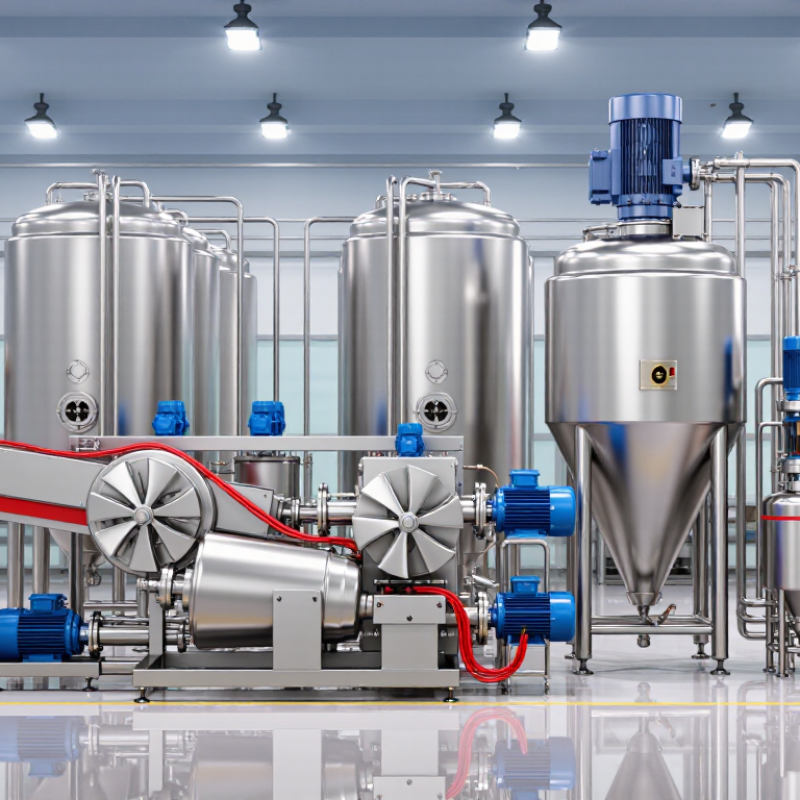
A chemical mixture machine combines liquids, powders, gases, or viscous materials into a consistent product. It controls flow, temperature, shear, residence time, and particle dispersion. Common designs include paddle mixers, ribbon mixers, high-shear units, and vacuum systems. The goal is uniformity. Small errors matter.
Chemical plants use these machines for coatings, adhesives, polymers, fertilizers, wastewater chemicals, and specialty formulations. A jacketed vessel can heat resin while an agitator removes cold spots. High-shear mixing helps disperse pigments and fine powders. Continuous systems support large-volume production, while batch machines offer better formula flexibility. In practice, selecting the wrong impeller can increase power use and create unwanted foam.
MarketsandMarkets’ 2024 Industrial Mixers Market report estimates the sector will grow at approximately 5.8% annually through 2029, although definitions vary between equipment categories. Cefic’s 2024 Facts and Figures reports that China represented about 40% of global chemical sales in 2023. This scale supports strong demand for reliable mixing equipment and process automation. Yet capacity alone does not guarantee quality. A machine may meet its datasheet target and still produce uneven viscosity during seasonal temperature changes. Operators should verify mixing time, torque, cleaning access, and laboratory scale-up results before purchase. These practical checks often reveal weaknesses that brochures omit.
How Chinese Chemical Mixture Machine Manufacturers Are Evaluated
China Top 10 Chemical Mixture Machine Manufacturers
Evaluating Chinese chemical mixture machine manufacturers requires more than comparing prices. Buyers should verify mixing uniformity, temperature control, sealing performance, and material compatibility. A reliable supplier provides batch records, factory acceptance tests, and traceable component documents. According to MarketsandMarkets’ 2024 industrial mixing equipment analysis, demand is rising with pharmaceutical, coatings, and specialty chemical production. This growth increases pressure on suppliers to prove repeatable performance.
Practical evaluation starts with the process. Ask for trials using your actual viscosity, particle size, and batch volume. Check torque readings during start-up and continuous operation. Inspect weld quality around the vessel and scraper clearance inside the chamber.
Manufacturers should explain cleaning procedures and prevent cross-contamination risks. ISO 9001 certification supports quality control, but it does not replace equipment testing. That point is often overlooked. Reports from the International Organization for Standardization also stress documented processes and continual improvement, rather than certificates alone.
Tips: Request a video-recorded factory test. Compare test data with your process limits. Review service response times and spare-part availability. Ask whether the quoted capacity reflects working volume or total vessel volume. These details can expose misleading comparisons.
One weakness remains common: some evaluations focus heavily on specifications, while operator experience receives little attention. A short on-site trial may reveal vibration, noise, or difficult cleaning that brochures never mention.
China’s Top 10 Chemical Mixture Machine Manufacturers
China’s top 10 chemical mixture machine manufacturers reflect a broad industrial base. They produce equipment for coatings, polymers, water treatment, adhesives, and specialty chemicals. Their machines commonly include high-shear mixers, planetary mixers, ribbon blenders, and vacuum dispersers.
Choosing a reliable manufacturer requires more than comparing prices. During factory evaluations, inspect stainless-steel welds, shaft alignment, seal performance, and control-panel safety. Ask for material certificates and documented test results.
A suitable machine should match viscosity, batch volume, temperature, and chemical compatibility. Jacketed vessels help control heating and cooling. Variable-speed drives support more stable processing. Small details matter.
Real production trials remain valuable. Request a sample test using materials with similar viscosity and density. Check whether the mixer reaches uniformity without excessive heat or trapped air. Review installation guidance, spare-part availability, and operator training. Compliance documents should match the destination market’s requirements. No ranking is perfect. A manufacturer may excel with powder blending but perform less effectively with highly viscous liquids. That limitation deserves honest attention. A careful buyer should compare technical drawings, maintenance records, delivery experience, and after-sales response before selecting among China’s top ten chemical mixture machine manufacturers.
Key Products, Technologies, and Customization Capabilities
When comparing the top ten chemical mixture machine manufacturers, examine their core products first. Common options include ribbon blenders, paddle mixers, high-shear units, planetary mixers, and vacuum systems. Each design suits different viscosities, powder loads, and batch sizes. A practical supplier explains why one mixing pattern fits your material. They should not sell the largest machine automatically. Bigger is not always better.
Strong manufacturers combine mechanical design with process control. Variable-speed drives help operators adjust shear during production. Load cells improve batching accuracy. Temperature sensors protect heat-sensitive compounds. Scrapers reduce wall buildup inside jacketed vessels. Some systems also offer vacuum mixing, closed powder feeding, and automated cleaning connections. Stainless steel grades, seal construction, and surface finish require careful review. Small details matter.
Customization separates experienced builders from catalogue sellers. A capable engineering team can modify shaft geometry, inlet positions, discharge valves, and vessel jackets. They should test representative materials before final approval. Factory trials, torque records, and sample analysis create useful evidence. Ask for drawings, maintenance access, spare-part plans, and operator training. No machine is perfect. Mixing dead zones can remain if testing is rushed. I would also question any promise of complete uniformity without defined sampling points. Reliable manufacturers admit limits, document adjustments, and refine the design around real production conditions.
How to Select a Reliable Chemical Mixture Machine Manufacturer
China Top 10 Chemical Mixture Machine Manufacturers
Selecting a reliable chemical mixture machine manufacturer requires more than comparing prices. Start with process evidence. Ask whether the manufacturer has tested your actual materials, including viscosity, density, temperature, and corrosion behavior. Request batch records, mixing uniformity results, and factory acceptance procedures. ISO’s 2023 Survey recorded more than 1.2 million ISO 9001 certificates worldwide, but certification alone proves little about mixing performance. Check whether the quality system controls welding, shaft alignment, seal installation, and final inspection.
Pay close attention to engineering depth. A dependable supplier should explain impeller selection, power calculations, residence time, and scale-up risks in clear language. The manufacturer should provide material certificates and traceable inspection records. Reports from MarketsandMarkets identify automation, process control, and energy efficiency as key directions in industrial mixing equipment. Therefore, ask for motor efficiency data, control-system documentation, and cleaning requirements. A polished brochure is not enough. I have seen specifications look complete while omitting crucial details, such as minimum working volume or seal temperature limits.
Tips: Request a small trial test before signing a large order. Compare three technical proposals using the same conditions. Inspect the workshop if possible. Review maintenance access, spare-part response time, and operator training. Also ask for an honest list of limitations. That answer may reveal more than a perfect sales presentation.
China Top 10 Chemical Mixture Machine Manufacturers - How to Select a Reliable Chemical Mixture Machine Manufacturer
Recommended procurement weighting for evaluating chemical mixture machine manufacturers. The framework prioritizes process performance, safety, quality assurance, lifecycle cost and after-sales support rather than brand visibility.
The 100-point weighting can be adapted to the material viscosity, batch size, hazardous-area classification, required automation level and applicable compliance standards.