How to Choose the Best Agitator Mixing Tank for Your Needs?
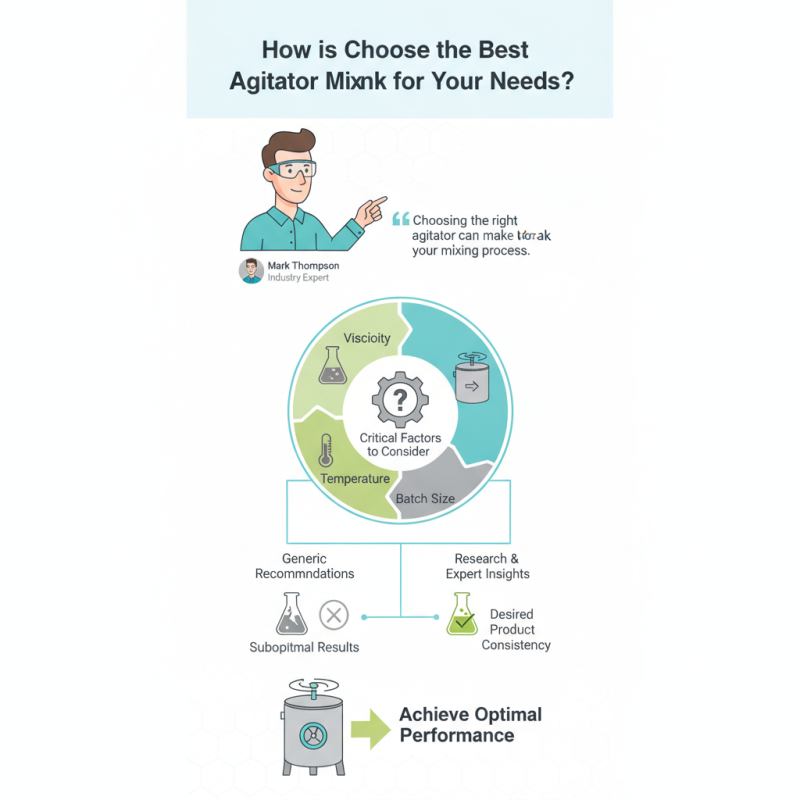
When it comes to selecting the right Agitator Mixing Tank, expertise is crucial. Mark Thompson, an industry expert with over 15 years of experience, once stated, "Choosing the right agitator can make or break your mixing process." This highlights the importance of understanding your specific needs.
Every production process has its unique challenges. The choice of an Agitator Mixing Tank can significantly influence efficiency. For example, viscosity, temperature, and batch size are critical factors to consider. Many users overlook these details, leading to suboptimal mixing results.
Investing time in research and expert insights is invaluable. Relying solely on generic recommendations may not suit your specific application. Remember, the goal is not just to mix, but to achieve the desired product consistency. Each decision counts in achieving optimal performance with your Agitator Mixing Tank.
Understanding the Purpose of Agitator Mixing Tanks in Industry
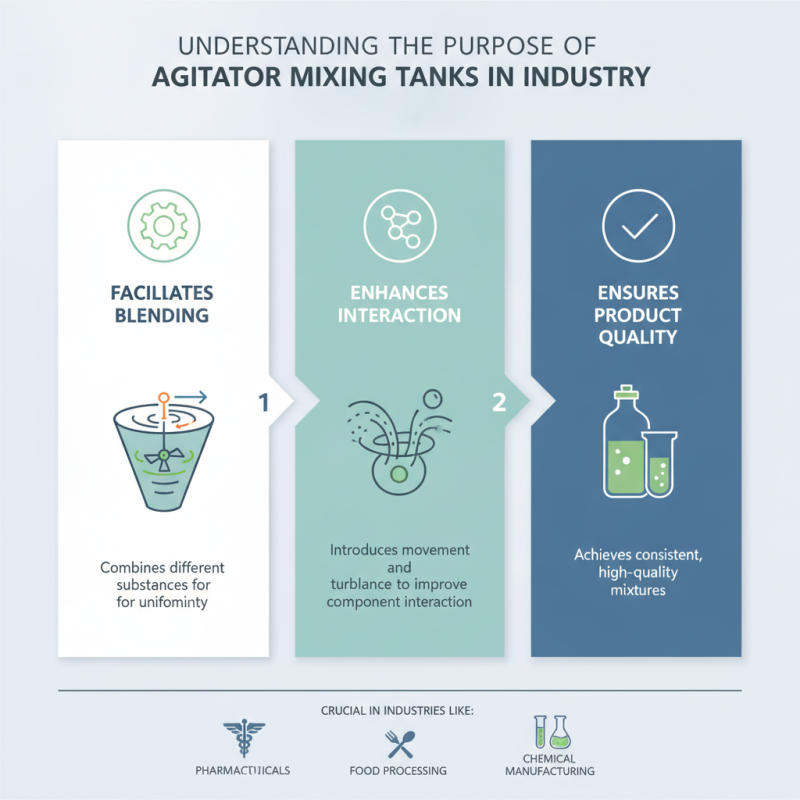
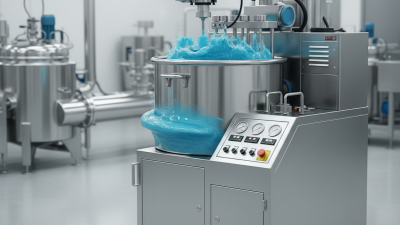
Agitator mixing tanks play a crucial role in various industries, including pharmaceuticals, food processing, and chemical manufacturing. These tanks facilitate the blending of different substances to achieve uniformity in products. By introducing movement and turbulence, they enhance the interaction between components, ensuring that mixtures are consistent and of high quality.
Understanding the specific purpose of an agitator mixing tank can help in selecting the right equipment. For example, tanks designed for high-viscosity fluids require different agitation mechanisms compared to those meant for lightweight liquids. This specificity is essential. A poorly matched agitator can lead to inefficient mixing and might affect product quality. It's vital to consider the viscosity and the physical properties of the materials being processed.
Many facilities overlook the importance of tank design features. Elements like tank shape, size, and the types of agitators significantly influence mixing efficiency. Reflecting on past experiences, some operators find themselves dissatisfied with their tank choices due to inadequate research. Choosing the right agitator mixing tank necessitates a clear understanding of your needs and the outcomes you desire.
Key Factors to Consider When Selecting an Agitator Mixing Tank
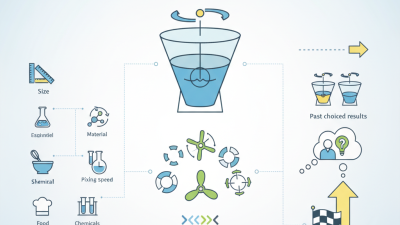
When selecting an agitator mixing tank, consider the tank's size and capacity. The requirement largely depends on the volume of materials you plan to mix. A tank that is too small can lead to inadequate mixing, while an oversized tank may waste energy and resources. The shape of the tank also plays a crucial role. For example, a cone-shaped tank may provide better mixing for certain materials compared to a cylindrical one.
Another key factor is the agitator design. Different mixing applications require specific agitator configurations. Paddle agitators are effective for low-viscosity fluids, while turbine agitators excel in high-viscosity scenarios. It’s essential to analyze the fluid's properties, such as viscosity and density, to choose the right agitator. This step is often overlooked but crucial for the overall effectiveness of your mixing process.
Consider the material of construction, too. Stainless steel is a popular choice for its durability and resistance to corrosion. However, it might not be suitable for all applications. Sometimes, a lower-cost alternative may be more practical, especially for less critical applications. It’s all about balancing cost with performance. Reflecting on these elements can significantly enhance your mixing efficiency and operational effectiveness.
Types of Agitators and Their Impact on Mixing Efficiency
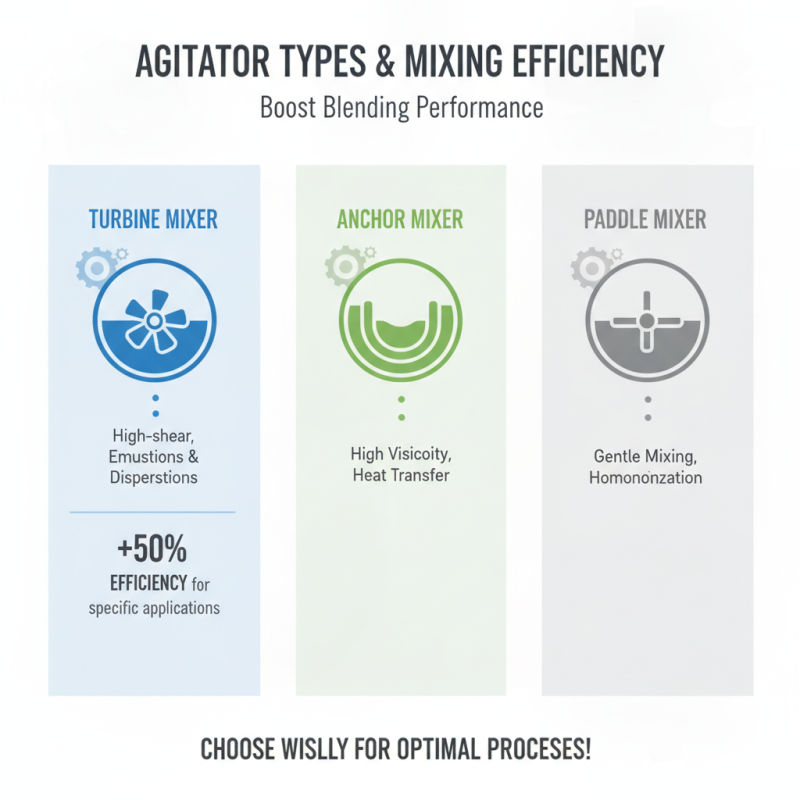
When selecting an agitator mixing tank, understanding the types of agitators and their impact on mixing efficiency is crucial. Common types include turbine mixers, anchor mixers, and paddle mixers. Each type has unique characteristics tailored for specific applications. For example, a turbine mixer is excellent for high-shear processes, making it ideal for emulsions and dispersions. Industry data indicates that turbine-style mixers can boost mixing efficiency by up to 50% in certain applications.
Paddle mixers are better suited for thicker mixtures. They provide gentle mixing and are effective in blending solids with liquids. A study from the American Institute of Chemical Engineers shows that the right paddle design can enhance mixing performance in viscous materials by 30%. Even though they are effective, careful consideration of the mixer speed and type is essential. An inappropriate choice can lead to inefficient processes and increased production times.
Moreover, the choice of agitator affects the energy consumption of the mixer. For instance, high-energy mixers can lead to increased operating costs. Balancing efficiency and energy use is a common challenge. The optimal performance often hinges on trial and error, fine-tuning the mixer to the specific needs of the operation. Hence, it is important to reflect on these choices continually.
Evaluating Tank Materials and Design for Specific Applications
When evaluating tank materials for your mixing application, consider the specific needs of your processes. Different applications may require different materials. For instance, stainless steel is a popular choice due to its durability and resistance to corrosion. However, it may not be suitable for all chemical environments. Plastic tanks, while lightweight and cost-effective, can suffer from wear and may not withstand harsh substances.
Design is another critical element. The shape of the tank can affect mixing efficiency. A wider base may facilitate better flow, while an agitator's position influences the mixing process. Some designs allow for easy access for cleaning and maintenance, but they may compromise space efficiency. Assessing these factors is essential to ensure reliability and productivity.
Inconsistent tank performance could stem from inadequate material selection. Over time, certain materials may degrade or become ineffective, leading to disruptions in your mixing operations. Regular inspections and maintenance can highlight issues before they escalate. Take a moment to reflect: are you putting enough thought into your tank's material and design?
Agitator Mixing Tank Material Comparison
This chart compares the durability ratings of various materials used in agitator mixing tanks. Higher ratings indicate better durability, which is an important factor in choosing the best mixing tank for your needs.
Maintenance and Longevity Tips for Your Agitator Mixing Tank
Maintaining your agitator mixing tank is crucial for optimal performance and longevity. Regular inspection is a key part of this process. Look for wear and tear, especially on the agitator blades. A study from the American Society of Mechanical Engineers highlights that proper maintenance can increase equipment lifespan by up to 30%. This statistic underlines the need for a proactive approach.
Cleaning the mixing tank is another critical task. Residue buildup can lead to inefficiencies and cross-contamination. A clean tank improves mixing efficiency by up to 15%, according to a report by the International Journal of Food Engineering. Ensuring that all components are hygienic not only maintains quality but also prevents costly downtime.
Moreover, proper lubrication is essential for agitator systems. Lack of lubricant can cause friction and damage bearings. A guideline from Penn State Extension suggests that grease should be checked quarterly to prevent failures. Ignoring this aspect can result in sudden breakdowns, underscoring the importance of routine maintenance checks. Utilizing these practices can greatly enhance the reliability and efficiency of your agitator mixing tank.