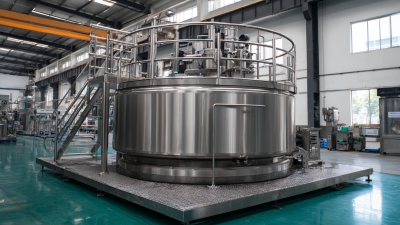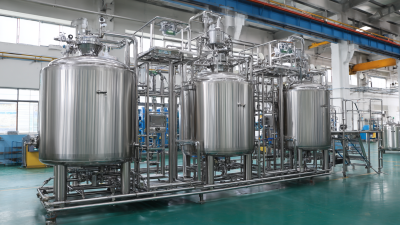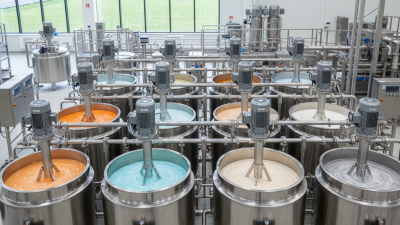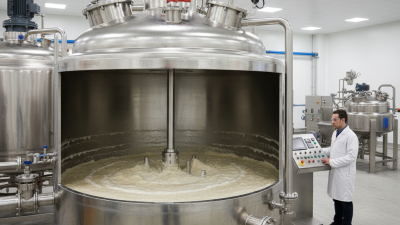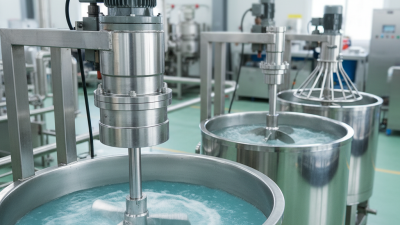
Selecting the right Agitator Mixing Tank is rarely a simple matter of capacity or price. Global buyers must match equipment design with viscosity, solids content, heat transfer needs, cleaning methods, and production scale. A 500-liter tank handling thin syrup behaves very differently from one processing dense cream, mineral slurry, or temperature-sensitive adhesive.
Edward L. Paul, a recognized mixing authority and co-author of Handbook of Industrial Mixing, describes mixing as “the process of reducing or eliminating nonuniformity in composition and temperature.” That principle remains practical on the factory floor. A top-entry agitator may suit general blending, while a side-entry design can support large storage vessels. Bottom-entry systems often improve circulation in compact process tanks. High-shear mixers help disperse powders and break agglomerates. Magnetic-drive models can reduce seal-related concerns in selected applications.
Details matter.
Impeller diameter, shaft speed, baffle arrangement, motor power, and tank geometry can change results significantly. Buyers should also examine wetted materials, surface finish, inspection access, spare parts, and local service capability. Hygienic food or pharmaceutical operations may require different construction priorities than chemical production.
The uncomfortable truth is that no universal tank exists. A catalog specification can look impressive and still produce dead zones, foam, overheating, or incomplete blending. Even experienced engineers sometimes underestimate scale-up behavior. This guide compares ten major Agitator Mixing Tank types, showing where each design performs well, where it may struggle, and which practical questions buyers should ask before approving a purchase.
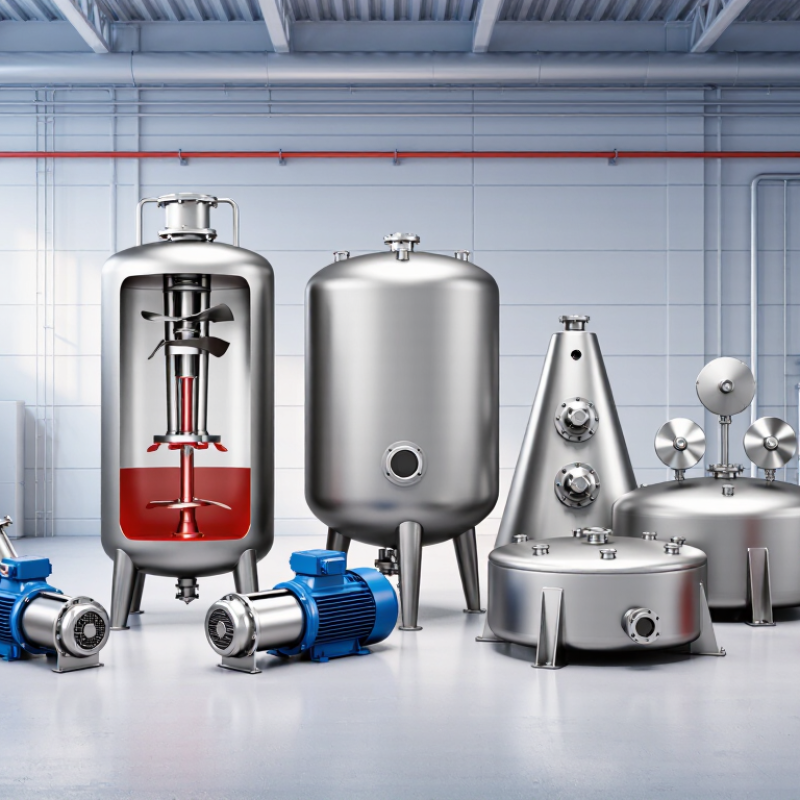
An agitator mixing tank combines a vessel, drive unit, shaft, impeller, baffles, and discharge outlet. The motor transfers torque through the shaft. The impeller then creates axial, radial, or tangential flow. This movement blends liquids, suspends solids, or improves heat transfer. Common designs include propeller, turbine, paddle, anchor, helical ribbon, and high-shear agitators. Tank materials often include stainless steel, carbon steel, or corrosion-resistant alloys. Vessel shape matters too. A vertical cylindrical tank usually supports predictable circulation.
Selection should follow viscosity, density, solids content, temperature, and required mixing time. Baffles reduce vortexing and improve energy transfer. An anchor impeller suits viscous products near the wall. A turbine offers stronger dispersion in lower-viscosity fluids. According to Grand View Research’s Industrial Agitators Market report, global demand is expected to grow steadily through 2030, driven by chemical, food, pharmaceutical, and water-treatment applications. The report also highlights process efficiency as a major purchasing factor. Energy use remains easy to underestimate.
Tips: Check the impeller diameter, shaft speed, power number, and tank-to-impeller clearance together. Do not select a motor by volume alone. Pilot testing is safer for non-Newtonian fluids. A larger impeller is not always better. I have seen mixing assumptions fail when viscosity changes sharply during heating. Confirm the real operating range, not only the design-point data.
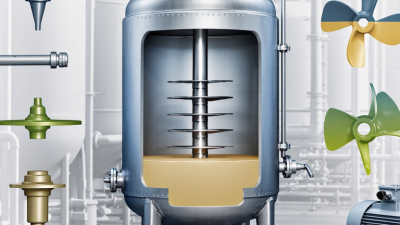
Choosing the right agitator mixing tank depends on viscosity, solids content, heat transfer, and cleaning requirements. A propeller tank suits low-viscosity liquids, such as water-based solutions. Pitched-blade turbine tanks handle moderate blending and suspension duties. Rushton turbine tanks provide strong radial flow for gas dispersion and fermentation processes. Hydrofoil agitators reduce power use while circulating large liquid volumes. Paddle tanks work well for gentle blending, especially in food and cosmetic formulations.
Anchor agitator tanks are designed for viscous products and scrape material from heated walls. Gate agitators offer similar wall coverage in large, slow-moving batches. Helical ribbon tanks manage heavy materials, including pastes and creams, with limited dead zones. Helical screw tanks move dense mixtures vertically and support challenging heat-transfer tasks. Rotor-stator tanks create intense shear for emulsions, dispersions, and fine particle breakdown. Performance changes quickly with tank diameter, baffle design, and fill level. Small details matter.
A practical selection should begin with pilot testing, not a catalog photograph. Measure mixing time, motor load, temperature uniformity, and cleaning effort. Short trials reveal problems early. An anchor may control wall buildup, yet it can consume considerable power. A hydrofoil may save energy, but it may not suspend heavy solids reliably. No design fits every process. Suppliers and engineers should verify materials, seals, access ports, and local safety requirements before final fabrication.
Top 10 Agitator Mixing Tank Types for Global Buyers
Key Design Differences in Impellers, Drives, and Tank Configurations
Global buyers often compare agitator tanks by volume, but internal geometry usually controls process results. Across the top ten tank types, the decisive differences appear in impellers, drives, and vessel configuration. An axial-flow impeller moves liquid vertically, while a radial design creates stronger lateral shear. Hydrofoil blades suit blending and solids suspension with lower power demand. High-shear turbines disperse powders faster, but they can raise heat and maintenance demands. Geometry matters.
Drive selection begins with torque, speed range, and startup load. Gear-driven units handle demanding duty cycles, while direct drives can reduce mechanical complexity. Variable-frequency control helps operators adjust speed when viscosity changes during a batch. Do not size the motor from horsepower alone. Ask for service factor, seal arrangement, shaft stiffness, and emergency restart conditions. Small details matter. An experienced engineer checks these points against measured density and viscosity, not catalog estimates.
Tank configuration changes mixing performance as much as the impeller. Vertical cylindrical tanks support predictable circulation, while cone bottoms improve drainage and solids recovery. Baffles limit vortexing; coils, dip pipes, and side entries can interrupt flow. For corrosive or abrasive duties, lining choice and weld quality deserve close inspection. I have seen acceptable calculations fail because a bottom outlet sat inside a stagnant zone. That mistake is easy to miss. Every specification should state working volume, liquid level, temperature, viscosity range, cleaning method, and installation limits. Some selections remain uncertain until pilot testing.
The chart shows representative engineering tip-speed bands for commonly used agitator configurations. Lower-speed anchor, gate, and helical-ribbon designs are typically selected for viscous products, while hydrofoil, propeller, and turbine impellers provide stronger circulation or higher shear in lower-viscosity services. Actual values depend on viscosity, impeller diameter, tank geometry, solids loading, and process objectives.
| Configuration | Typical impeller and flow | Common drive and tank arrangement |
|---|---|---|
| Top-entry propeller | Axial flow, economical circulation | Direct or geared drive; vertical shaft with baffles |
| Top-entry hydrofoil | High pumping efficiency and low shear | Geared or direct drive; large-diameter impeller |
| Pitched-blade turbine | Mixed axial-radial flow | Geared drive; baffled cylindrical tank |
| Rushton turbine | Radial flow and gas dispersion | Geared drive; commonly used with spargers and baffles |
| Retreat-curve turbine | Radial flow with reduced power draw | Geared drive; suitable for solids suspension and blending |
| Anchor agitator | Wall-sweeping, low-speed mixing | High-torque geared drive; close-clearance vessel |
| Gate agitator | Gentle wall-sweeping circulation | High-torque drive; jacketed or scraped-wall tank |
| Helical-ribbon agitator | Strong axial movement for viscous materials | High-torque geared drive; narrow-clearance vessel |
| Side-entry propeller | Horizontal axial circulation | Side-mounted geared drive; large storage tank |
| Bottom-entry hydrofoil | Low-shear vertical circulation | Bottom-mounted drive; useful for sanitary or compact layouts |
Global buyers usually compare propeller, paddle, turbine, anchor, gate, helical ribbon, high-shear, rotor-stator, bottom-entry, and dual-shaft tanks. Capacity should match batch volume, working level, and headspace. A 500-liter tank may process well at 350 liters but struggle when filled beyond its design range. Larger tanks also need stronger shafts, supports, and motors.
Material selection depends on the product, temperature, cleaning method, and local compliance requirements. Stainless steel suits many hygienic applications, while specialized alloys may handle corrosive liquids better. Surface finish matters. Rough welds can trap residue and complicate cleaning.
Mixing performance depends on viscosity, solids content, impeller diameter, speed, and tank geometry. A turbine may disperse particles effectively, while an anchor mixer handles thick creams more gently. There is no universal winner. I have seen buyers choose powerful motors, yet overlook poor baffle design. That mistake can create a visible vortex without proper blending.
Tips: Request a mixing trial with your actual material. Share viscosity at operating temperature, not only room temperature. Compare useful working capacity, not total tank volume. Ask for shaft torque, impeller speed range, cleaning access, and documented test results. Also review spare-part availability and after-sales support in your region. A technically perfect tank can become inconvenient when maintenance is slow.
Selection should begin with fluid behavior, not tank appearance. A low-viscosity liquid may need a propeller or pitched-blade turbine. Thick creams often require an anchor or helical ribbon. Suspended solids demand adequate bottom clearance and verified shear. Particle size, density, foaming tendency, and heat sensitivity also affect the choice.
Small details matter. A 2023 IEA Energy Efficiency report states that industry consumed about 37% of global final energy in 2022. Agitator power therefore deserves early review, not late correction. Variable-speed drives, suitable impeller diameter, and efficient baffles can reduce unnecessary loading. However, one calculation is never enough. Actual viscosity may change during heating, dilution, or reaction.
Standards define safer purchasing boundaries.
ASME Section VIII may apply to pressurized vessels. Hygienic applications should consider applicable sanitary design guidance, cleanability, drainability, and surface finish. ATEX requirements may govern explosive atmospheres in some regions. Materials must also match chlorides, acids, solvents, and cleaning chemicals. A practical specification should state operating temperature, pressure, batch volume, torque, seal arrangement, and design code. Field commissioning often reveals overlooked issues, such as vortex formation or dead zones. That is an imperfect but valuable lesson.