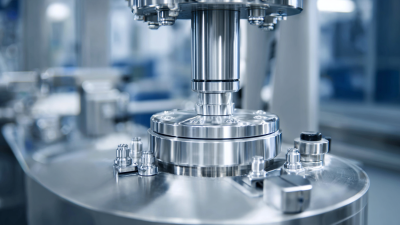
Why choose a High Shear Homogenizer when conventional mixing equipment already exists? The answer begins with control. A High Shear Homogenizer combines rapid rotor movement with a fixed stator. This creates intense local turbulence inside the processing chamber. The action breaks agglomerates, reduces droplet size, and improves formulation uniformity.
Consistency matters. In practical production, operators often notice the difference in appearance first. A cream becomes smoother, a suspension shows fewer visible particles, and an emulsion separates more slowly during storage tests. These results depend on more than speed. Product viscosity, batch volume, temperature, processing time, and ingredient order all influence performance. Experienced users adjust these variables instead of relying on one standard setting.
The equipment can also shorten mixing cycles and support repeatable quality between batches. That matters when production moves from laboratory trials to larger vessels. However, higher shear is not automatically better. Excessive energy may increase temperature, introduce air, or damage sensitive materials. The trade-off is real. Equipment selection should consider cleanability, seal design, maintenance access, and verified scale-up data. Some formulations still perform better with gentler agitation or staged processing.
Reliable decisions come from measurable evidence. Particle-size testing, viscosity checks, microscopy, and stability observations provide stronger guidance than appearance alone. A well-selected High Shear Homogenizer can improve process control, but it should match the formulation, workflow, and quality requirements. The best choice is not always the most powerful machine.
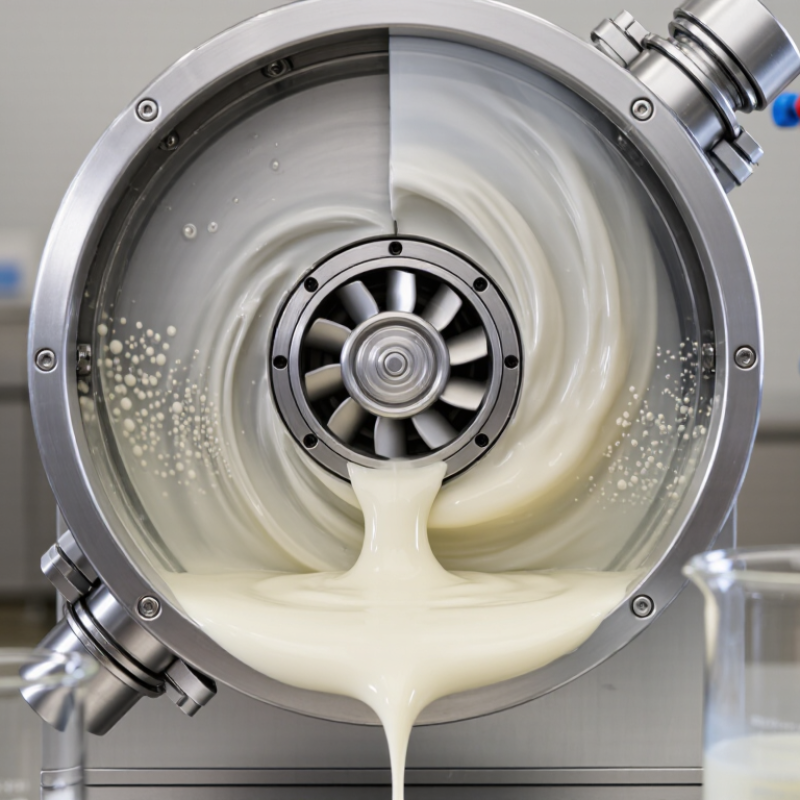
A high shear homogenizer is a process machine that reduces droplets and particles through intense mechanical force. Its rotor spins rapidly inside a closely fitted stator, creating turbulence, pressure changes, and strong shear within the material. This action helps disperse ingredients more evenly than simple stirring.
In practical use, the difference can be visible. Oil droplets become finer, powders wet more quickly, and sediment may decrease in a liquid mixture. A technician may place a beaker under the processing head and observe the texture change within minutes. However, speed alone does not guarantee quality. Batch volume, viscosity, temperature, and processing time all affect the final result.
Control matters.
Excessive shear can generate heat, introduce air, or damage sensitive structures. I have seen operators extend processing time when a smaller adjustment would have worked better. That approach wastes energy and can reduce product consistency. Reliable operation requires checking the rotor-stator clearance, monitoring temperature, and recording actual processing conditions. A pilot trial is often useful before scaling up, although it may not perfectly predict production behavior. The material can respond differently in a larger vessel. Proper cleaning and inspection are also essential, especially when narrow gaps retain residue. With careful testing, a high shear homogenizer becomes a practical tool for producing smoother, more stable, and more uniform mixtures.
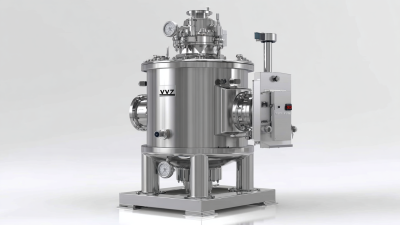
High-shear homogenization works by forcing fluid through a narrow zone between a fast rotor and stationary stator. The rotor creates intense velocity gradients. These gradients generate shear stress, turbulence, and local pressure changes. Droplets stretch, break, and redistribute through the continuous phase. In many systems, tip speeds range from 10 to 30 m/s, while processing temperatures can rise quickly as mechanical energy becomes heat.
Gap size matters. So does residence time. A smaller gap may improve dispersion, but it can increase blockage risk and cleaning difficulty. Multiple passes often reduce particle size more consistently than one aggressive pass. Results depend on viscosity, solids loading, surface tension, and stabilizer selection. Shear alone cannot rescue a poorly designed formulation.
MarketsandMarkets estimated the global homogenizers market at about USD 2.1 billion in 2023, with projected growth to roughly USD 2.8 billion by 2028. Grand View Research has also reported continued growth in high-shear processing equipment across food, pharmaceutical, and chemical applications. These figures indicate investment, not guaranteed performance. A common engineering mistake is judging homogenization by appearance alone. A smooth surface can hide broad particle-size variation. Laser diffraction, microscopy, viscosity checks, and temperature records provide stronger evidence. More shear is not automatically better.
High shear homogenizers benefit materials that resist ordinary mixing. They are especially useful for oil-in-water emulsions, creams, sauces, coatings, and adhesive dispersions. A rotor-stator head creates intense local turbulence. This action breaks droplets, softens agglomerates, and improves ingredient distribution. The result is often a smoother texture and more consistent appearance.
Viscous liquids can gain noticeably from controlled high shear. Pigments disperse more evenly in coatings, while powders wet faster in liquid bases. Food processors may use the equipment for dressings, flavored beverages, and stable sauces. Cosmetic formulators often apply it to lotions and gels. In practical trials, temperature matters as much as speed. Friction can warm the batch quickly, especially when processing thick materials. A temperature probe and staged speed increase provide useful control.
Not every material benefits from maximum shear. Fragile particles, heat-sensitive ingredients, and foaming systems may require gentler conditions. Excessive processing can damage structure, trap air, or produce an unstable emulsion. That limitation is easy to underestimate. I would test a small batch first, record mixing time, temperature, and viscosity, then adjust the process. Vessel shape, fill level, and head position also influence results. A well-designed process may use short high-shear cycles instead of continuous operation. That approach can reduce heat buildup while preserving the desired particle size and texture.
Typical dispersed-phase size targets for materials and processes that benefit from intense mixing, emulsification, and deagglomeration.
High-shear homogenizers rapidly reduce droplet and particle size, improve phase uniformity, and help wet powders into liquids. Typical target ranges include approximately 1–10 μm for oil-in-water emulsions, 0.1–1 μm for pigment dispersions and liposomal systems, 1–10 μm for pharmaceutical suspensions, and 1–20 μm for cosmetic creams. Actual results depend on formulation, viscosity, rotor speed, processing time, temperature, and the number of passes.
A high shear homogenizer applies intense mechanical force to liquids and suspended particles. In practical processing, this action breaks droplets, agglomerates, and soft solids into finer structures. Smaller droplets can produce smoother emulsions and more stable dispersions. Operators often notice faster blending and fewer visible lumps. That matters during demanding production cycles.
The equipment can improve batch consistency when speed, time, and temperature remain controlled. A narrower particle or droplet distribution may support predictable texture, appearance, and performance. It can also reduce repeated processing, saving energy and operator time. However, high shear is not a magic solution. Excessive force may raise temperature, damage sensitive ingredients, or create unwanted foam. I have seen good results weaken when cooling and feed rates were ignored. That lesson deserves attention.
Tips: Measure viscosity before testing. Start with moderate rotor speed. Record processing time and temperature. Check samples under the same conditions. Do not assume one setting fits every formula. Pilot trials reveal weaknesses early, although they cannot predict every scale-up problem.
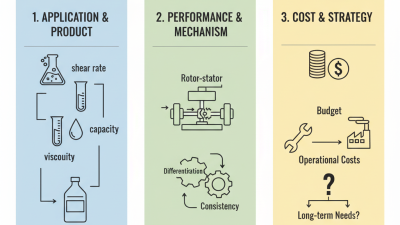
Selecting a high shear homogenizer should begin with the material, not the equipment catalogue. Measure viscosity, particle size, solids content, and batch volume. A thin liquid may need less power than a dense suspension. The difference can be substantial.
Define the process target clearly. Do you need rapid dispersion, stable emulsification, or particle reduction? Rotor-stator geometry, shear intensity, and residence time influence each result. Ask how the material changes during processing. Some products heat quickly, so temperature monitoring and cooling capacity become essential. Small tests help, but they may not predict full-scale behavior perfectly.
Cleanability deserves equal attention. Product-contact surfaces should suit the formulation and cleaning method. Inspect welds, seals, shaft design, and drainage points. Material compatibility also matters when ingredients are acidic, abrasive, or sensitive to contamination. Operators should have safe access, clear controls, and practical maintenance procedures.
Think beyond purchase price. Check motor load, spare-part availability, noise, installation space, and future capacity. A machine sized only for today may limit tomorrow’s production. Yet oversized equipment can waste energy and reduce process control. That mistake is easy to make.
Reliable selection requires documented trials and measurable results. Record temperature, processing time, power use, and final particle size. Review the data with process and maintenance specialists. Experience helps, but assumptions still need testing.