How to Choose the Right Agitator Mixer Tank?
Choosing the right Agitator Mixer Tank begins with the product, not the motor. Is the liquid thin like water, or thick enough to cling to a spatula? Will solids settle during a pause? These details shape the required impeller, tank geometry, and mixing speed. A mismatch can leave dead zones, prolong batch times, or damage heat-sensitive ingredients. Small details matter.
The U.S. Department of Energy’s 2015 Bandwidth Study on Energy Use and Potential Energy Saving Opportunities in U.S. Chemical Manufacturing examines energy use and efficiency opportunities across the sector. Its findings reinforce a practical point: equipment choices affect operating efficiency, not just purchase price. For mixing fundamentals, the AIChE-published Handbook of Industrial Mixing by Paul, Atiemo-Obeng, and Kresta is a useful technical reference. It explains why viscosity, flow patterns, and impeller design must be considered together. Still, a handbook cannot replace testing the actual product.
Start with measurable process requirements: batch volume, viscosity range, solids content, temperature, and target mixing time. Then compare impeller type, rotational speed, motor power, baffle arrangement, and cleanability. Ask suppliers for performance data under conditions close to your process. A polished brochure is not a trial result. For scale-up, check whether the proposed design preserves the mixing outcome—not merely the same shaft speed. That distinction is easy to miss. This guide outlines the questions that help buyers choose a tank suited to their process, while recognizing that early estimates may need revision after pilot testing.
Assess the Process Requirements and Mixing Objectives
Before selecting an agitator mixer tank, define what the batch must achieve, not just how much it holds. Is the goal dissolving powder, suspending solids, blending liquids, or improving heat transfer? Each task places different demands on flow, shear, and mixing time. Record viscosity at operating temperature, ingredient density, particle size, and any changes during processing. A thin liquid may circulate easily, while a thick paste can require higher torque and careful impeller clearance. Small details matter.
Set measurable criteria before comparing tank designs: target uniformity, maximum blend time, acceptable temperature variation, and limits on product damage. For a suspension, check whether particles settle during pauses, not only while the agitator runs. With fragile crystals or emulsions, excessive shear can be as troublesome as poor blending. Use actual batch data when possible, including start-up and discharge conditions. Lab tests help, but scale-up is rarely a perfect copy; tank diameter, fill level, and impeller position change circulation. Cleaning and sampling access are easy to overlook when mixing performance takes priority. Even careful estimates can miss something. Note the uncertainties, then test the most important assumptions before finalizing the tank.
Choose the Tank Geometry and Capacity
Tank geometry controls circulation, blending time, and the risk of stagnant zones. For a conventional baffled vessel, Paul et al.’s Handbook of Industrial Mixing (2004) gives useful starting proportions: liquid depth near the tank diameter, an impeller about one-third of the tank diameter, and four baffles roughly one-tenth of the tank diameter wide. These are design benchmarks, not guarantees. A tall, narrow tank may suit limited floor space, but it can leave poor circulation near the bottom.
Size capacity around the largest actual batch, not the vessel’s nominal volume. Separate working volume from gross volume, and leave headspace for foam, splashing, or thermal expansion. Viscous fluids, suspended solids, and frequent batch changes can all shift the best geometry. A tidy ratio can still be wrong; pilot testing or validated mixing calculations help reveal what the simple rules miss.
Tips: Confirm minimum and maximum fill levels before selecting impeller height. Ask the mixer designer to check the expected viscosity range and solids load.
Select an Agitator Type and Impeller Design
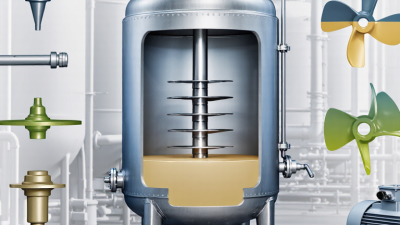
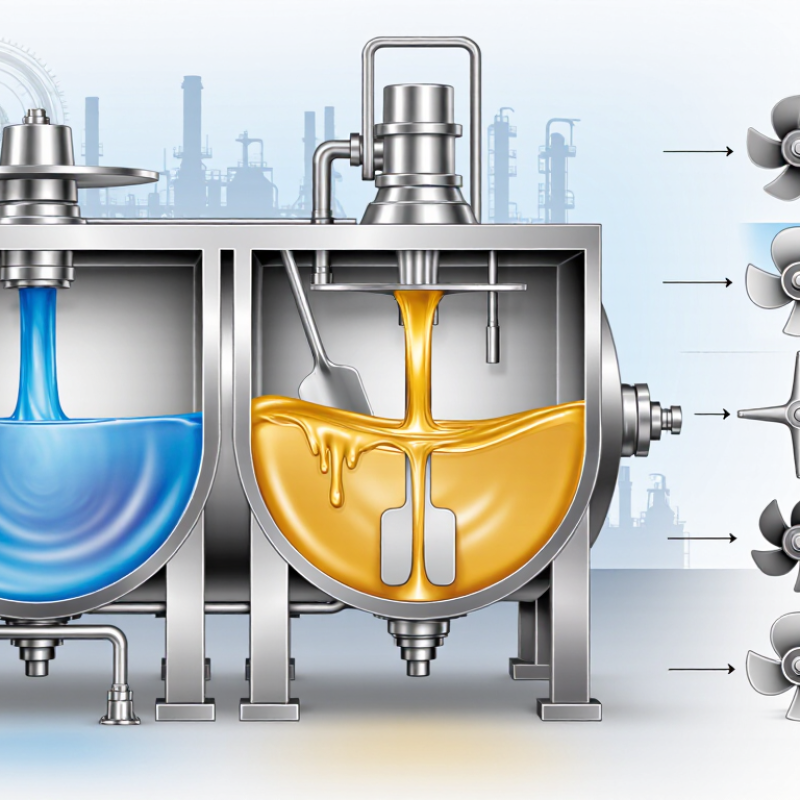
Choosing an agitator starts with the material, not the motor rating. A propeller or pitched-blade impeller often suits low-viscosity liquids that need steady top-to-bottom circulation. For stronger radial flow or gas dispersion, a turbine-style impeller may be more appropriate. These are starting points, not fixed rules.
For thick products, an anchor or helical-ribbon design can move material near the tank wall, where slow zones often form. Imagine a viscous batch creeping around the vessel while the center turns freely. That pattern can signal poor circulation. Baffles also matter: without them, the liquid may spin like a whirlpool instead of blending evenly. Small details count.
Impeller choice depends on shear sensitivity, solids, batch size, and the tank’s proportions. Fragile particles may need gentler mixing, while settling solids may require enough bottom flow to stay suspended. A common shortcut is to select by viscosity alone. It helps, but it can miss changes during processing, such as a powder thickening as it hydrates. Review the full operating range, then test representative batches when possible. Observe mixing time, temperature, and any persistent dead zones; a design that works on paper may still need adjustment in the tank.
Match Materials, Motor Power, and Operating Conditions
How to Choose the Right Agitator Mixer Tank?
Match the tank and agitator to the material, not just the batch size. A thin liquid may mix well with a modest-speed impeller, while a thick paste can demand higher torque and a slower, sturdier drive. Fibers or suspended solids may need an impeller that keeps material moving near the tank floor. Check whether the product is shear-sensitive, too; aggressive mixing can damage delicate ingredients.
Motor power matters, but it is not the whole story. Compare required torque, operating speed, and viscosity at the actual process temperature. A mixture that flows easily when warm may resist movement during a cold startup. Also consider tank diameter, liquid depth, baffles, and headspace. These details affect circulation and can create dead zones. It is easy to overlook them. Ask for operating data across the full batch cycle, then confirm the selection with a representative mixing test where practical.
Tips: Share material samples, batch volumes, temperature range, and cleaning needs with the equipment supplier. Note any settling or foaming. One estimate may still miss real-world variation, so leave room to review the choice after trials.
Check Safety, Cleaning, and Maintenance Requirements
Before comparing mixing performance, check how the tank can be made safe to operate. Look for guards around couplings, secure covers, and interlocks that stop the agitator when access doors open. The motor and controls should suit the tank’s actual operating conditions, including heat, moisture, and washdown exposure. Ask how workers isolate electrical and mechanical energy before inspection. A clear procedure matters. Do not rely on a warning label alone.
Cleaning depends on what the tank processes and how often products change. Inspect the interior for corners, welds, shaft seals, and other areas where residue could collect. A spray device may help, but it does not prove every surface gets clean. Check that the tank drains fully and that cleaning access is practical for operators wearing required protective equipment. If cleaning must be verified, agree on inspection or testing methods before purchase. This part is easy to underestimate.
Maintenance needs space, not just a checklist. Ask how technicians reach bearings, seals, and the gearbox, and whether common wear parts can be replaced without dismantling the entire assembly. Review recommended inspection intervals and keep records of leaks, unusual noise, and vibration. A compact layout may save floor space, yet make routine service awkward. That trade-off deserves a real site review.