Leave Your Message
-
Phone
-
E-mail
-
Whatsapp
-
WeChat

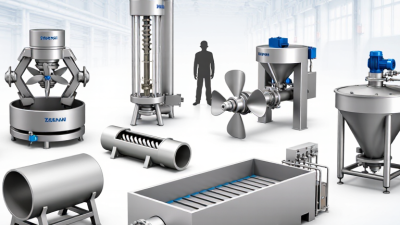
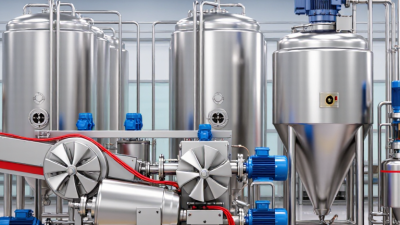
Choosing an industrial mixer is not just a matter of comparing motor power or tank size. The right machine must suit the material, batch volume, production pace, and cleaning routine. A powder blend may need a ribbon mixer, while a thick paste could call for a planetary design. Small details matter. Blade geometry, shaft seals, and discharge access can affect both product consistency and daily maintenance.
This guide to the Top 10 Industrial Mixing Machines for Global Buyers introduces common equipment types and the jobs they handle well. It also considers practical buying factors, including viscosity range, mixing speed, construction materials, control options, and service support. Buyers searching for a Mixing Machine Industrial solution should compare these factors against real production conditions, not just catalog claims. Ask suppliers for relevant test data, clear specifications, and references for similar applications. A machine that performs well with one formula may struggle with another. That part is easy to underestimate.
No single ranking fits every plant. Some operations value fast changeovers; others need stable temperature control or high-throughput blending. Even experienced teams can over-specify equipment before measuring their actual process needs. That deserves a second look. The machines featured here offer a starting point for comparison, not a substitute for technical review. Consider the product, facility layout, operator workflow, and long-term maintenance before making a final decision.
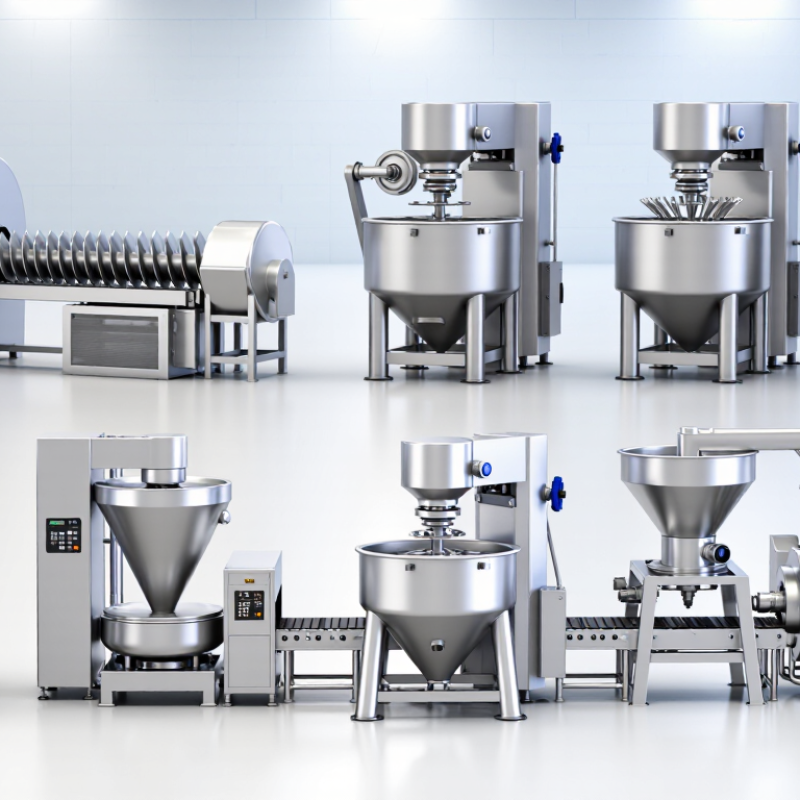
Industrial mixing machines combine powders, liquids, pastes, or granules until their ingredients are distributed as required. Their purpose is not always to create a perfectly uniform blend. Some processes need gentle movement to protect fragile particles; others need stronger shear to break up lumps or disperse thick materials. The right approach depends on the recipe, batch size, and desired texture.
Inside a mixer, a motor turns an agitator, ribbon, paddle, or set of rotating blades. The moving parts circulate material through the vessel, while the vessel’s shape and fill level influence the mixing pattern. A ribbon mixer, for example, moves dry ingredients along the trough and back again. A high-shear mixer uses fast-moving blades to reduce droplets or clumps. Heat, mixing speed, and processing time can all affect the result. Small changes matter.
Operators often check samples from different points in a batch, rather than judging consistency by appearance alone. They may also record mixing time, temperature, and load size for repeatability. These checks provide useful evidence, but they do not guarantee identical results when ingredients vary. There is a catch. Before selecting equipment, buyers should test representative materials under realistic conditions and review cleaning access, safety features, and maintenance needs. Lab tests can help, but full-scale behavior may still differ.
| Industrial Mixer Type | What It Does | How It Works | Common Materials and Uses | Typical Operating Mode |
|---|---|---|---|---|
| Ribbon Blender | Blends dry powders and granules into a reasonably uniform mixture. | Helical ribbons rotate inside a horizontal trough, moving material in opposing axial directions and across the vessel. | Powdered food ingredients, chemicals, minerals, and agricultural materials. | Batch; suited to dry, free-flowing or moderately cohesive solids. |
| Paddle Mixer | Mixes, folds, or gently conditions bulk solids. | Paddles on a horizontal shaft lift and move material through the mixing chamber. Paddle shape and speed influence mixing intensity. | Powders, granules, animal feed, and other bulk solids. | Batch or continuous, depending on the design. |
| Twin-Shaft Paddle Mixer | Provides rapid convective mixing and can distribute small amounts of liquid through bulk solids. | Two shafts fitted with paddles move material through overlapping mixing zones, repeatedly lifting and redistributing it. | Dry blends, feed, building materials, and solids requiring liquid addition or conditioning. | Batch or continuous; the mixing action is generally more intensive than gentle tumbling. |
| Ploughshare Mixer | Intensively mixes powders and granules, including blends that are difficult to mix uniformly in a simple tumbler. | Plough-shaped tools rotate in a horizontal vessel, creating vigorous three-dimensional movement. Optional choppers can break agglomerates or help disperse added liquids. | Fine powders, granules, and formulations requiring liquid distribution or deagglomeration. | Usually batch; configuration and mixing intensity depend on the material and process. |
| Double-Cone Blender | Blends free-flowing solids with relatively gentle handling. | A double-cone vessel rotates, repeatedly dividing and recombining the contents as the material tumbles. | Dry powders and granules that flow readily and do not require high-shear mixing. | Batch; commonly selected when gentle tumbling is appropriate. |
| V-Blender | Blends free-flowing dry solids through repeated particle redistribution. | A V-shaped vessel rotates, causing the material to split between the vessel arms and recombine during each rotation. | Dry powders and granules, especially where a gentle tumbling action is suitable. | Batch; performance depends on fill level, material flow, and blending time. |
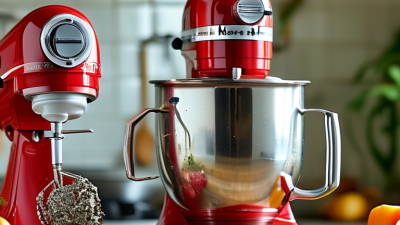
| Planetary Mixer | Mixes viscous pastes, doughs, and other materials that are difficult to circulate with a simple rotating blade. | The mixing tool rotates on its own axis while also moving around the vessel, sweeping through much of the batch. | Thick pastes, doughs, putties, coatings, and similar high-viscosity products. | Batch; tool and vessel design should match the product’s viscosity and consistency. |
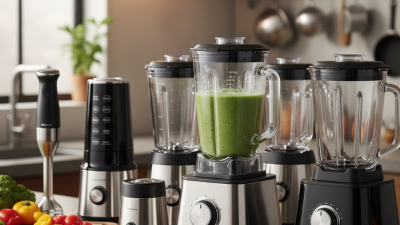
| Batch High-Shear Rotor-Stator Mixer | Disperses one phase into another and can help reduce agglomerates or form emulsions. | A fast-rotating rotor draws material through a close-clearance stator, where mechanical shear and circulation break up and distribute the material. | Liquid blends, emulsions, suspensions, and powders dispersed into liquids. | Batch; useful when a process needs more shear than a conventional agitator provides. |
| Inline Rotor-Stator Mixer | Continuously disperses or emulsifies materials as they pass through a mixing head. | A pump feeds the process stream through a rotor-stator assembly, where high local shear acts on the flowing material. | Continuous liquid processing, emulsions, suspensions, and liquid streams containing dispersed powders. | Continuous; the process requires a suitable pump, flow rate, and pressure arrangement. |
| Static Mixer | Mixes compatible flowing streams inside a pipe without a powered moving mixing element. | Fixed internal elements repeatedly divide, redirect, and recombine the flow as a pump moves material through the pipe. | Liquids and, in suitable designs, gas-liquid or other flowing process streams. | Continuous; pressure drop, flow behavior, and stream properties need to be considered. |