What Is an Agitator Mixing Tank Used For?
An Agitator Mixing Tank is used to blend liquids, keep suspended solids moving, and support consistent processing inside a vessel. A motor turns an impeller, creating circulation through the material. In a food plant, that may mean blending syrup until it looks uniform. In water treatment, agitation can help disperse treatment chemicals. The tank may also support heat transfer when paired with a jacket or coil. The exact job depends on the product and process.
Its performance is not determined by the motor alone. Impeller shape, tank geometry, baffles, fill level, and operating speed all affect flow. A thick paste behaves differently from a thin liquid. Too little agitation may leave settled material or uneven concentrations; too much can introduce air, create excess shear, or waste energy. Small details matter. Operators often watch for vibration, unusual noise, temperature changes, or material collecting near the tank wall. These observations can reveal problems, though they do not replace proper inspection and process testing.
Choosing a tank starts with clear process requirements: what must be mixed, how quickly, and under what conditions. There is no single setup for every application. A design that works well for one batch may perform poorly with another, and that limitation is easy to underestimate. This guide explains common uses, key components, and practical selection considerations, while recognizing that final equipment choices should be checked against product data and qualified engineering advice.
What an Agitator Mixing Tank Is and How It Is Built
What Is an Agitator Mixing Tank Used For?
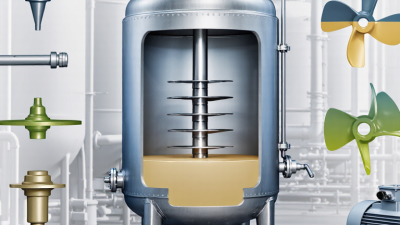
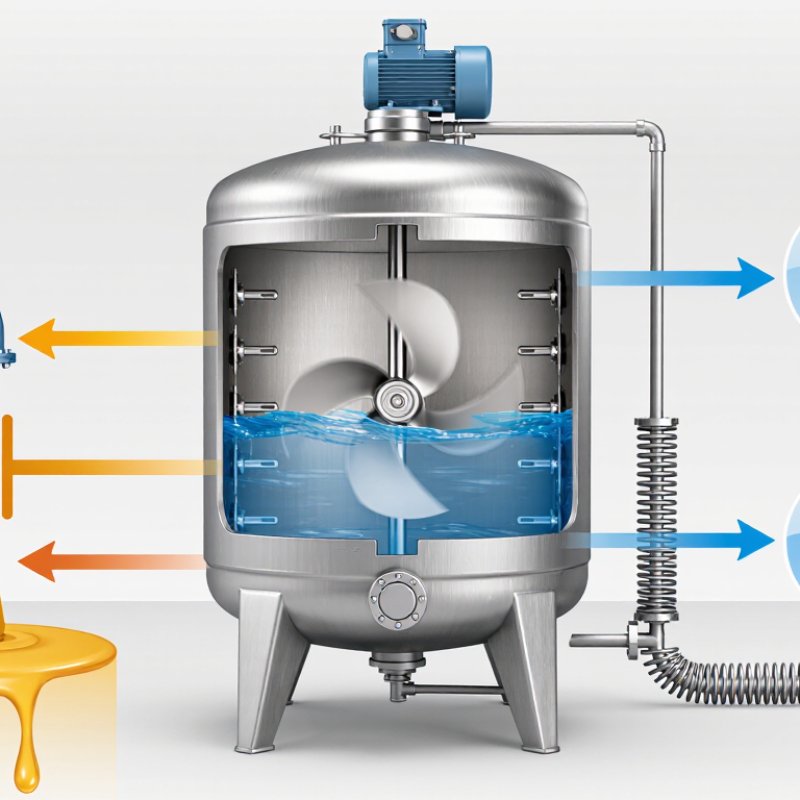
An agitator mixing tank combines liquids, dissolves powders, or keeps suspended particles evenly distributed. Its basic structure is straightforward: a tank, a motor, a drive shaft, and one or more impellers. The motor turns the shaft, and the impeller moves material through the vessel. Simple in principle.
The tank may be cylindrical or rectangular, with a dished or flat bottom. Impeller shape and position affect flow: a pitched blade can move liquid vertically, while a turbine-style impeller can create stronger local mixing. Baffles attached to the inner wall help reduce swirling. The vessel may also include a jacket for heating or cooling, plus a sealed cover and shaft seal to limit splashing or contamination. Material choice, clearances, and cleaning access matter as much as motor power. A powerful motor alone does not guarantee a uniform batch.
Tips: Match the impeller to the liquid’s viscosity and the task. Check whether powders settle near the bottom, and inspect seals and blades during routine cleaning. If results vary, review the fill level and mixing time before increasing speed; more agitation can introduce air or create excess heat. Mixing tests are useful, though scale-up may still behave differently.
How the Agitator Mixes Materials Inside the Tank
What Is an Agitator Mixing Tank Used For?
How the Agitator Mixes Materials Inside the Tank
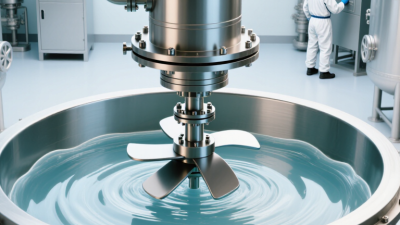
An agitator mixing tank blends liquids, suspends solid particles, and helps move heat through a batch. Inside, a motor turns an impeller. Its blades push material outward or downward, creating circulation that carries ingredients through the vessel. Baffles fixed to the tank wall reduce swirling, so the contents move around rather than spinning as one mass. Small details matter. Impeller shape, speed, fill level, and liquid thickness all affect the result.
The flow may be gentle or forceful. A propeller typically creates strong circulation, while a turbine can deliver more local shear for dispersing or breaking up droplets. The Handbook of Industrial Mixing: Science and Practice (Paul et al., 2004) describes impeller-flow regimes using Reynolds number: laminar flow is generally below about 10, while fully turbulent flow is typically above about 10,000. These are guideposts, not universal settings; tank geometry and material properties change performance. The textbook picture is tidy. Real batches can be less predictable, especially when powder clumps or viscosity rises during processing.
Tips: Start with the material’s viscosity and target batch size. Watch for dead zones near the bottom, and adjust speed gradually; faster is not always better.
Which Materials and Processes It Can Handle
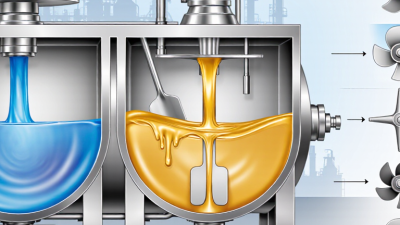
An agitator mixing tank handles materials that need consistent blending, suspension, or gentle circulation. It can mix thin liquids, viscous syrups, and liquid-solid mixtures. Examples include water-based solutions, food ingredients, and process fluids. The right setup depends on viscosity, particle size, and how quickly ingredients must dissolve. Thick mixtures may need more torque, while fragile particles can break under excessive shear. Small details matter.
Common processes include dissolving powders, keeping particles suspended, blending ingredients, and supporting heat transfer. A tank can help reduce settling during a batch, but it cannot correct every formulation problem. If particles clump when added too quickly, changing the addition rate may help more than increasing speed. I would not assume one impeller suits every material; testing a small batch can reveal dead zones or foaming. Watch the wall.
Tips: Check material compatibility with all wetted surfaces. Record speed, temperature, and mixing time during trials. Look for settling after the agitator stops, too. A clear-looking batch is not always evenly mixed.
Where Agitator Mixing Tanks Are Used
Agitator mixing tanks are used wherever liquids, powders, or suspended solids must stay evenly distributed. In food plants, they blend sauces, dairy mixes, syrups, and beverage ingredients. Operators may watch for dry powder clinging above the liquid line or thick product settling near the outlet. A tank’s impeller, baffles, and speed should match the material; one setup rarely suits every batch. Small details matter.
Water and wastewater facilities use mixing tanks to disperse treatment chemicals and keep solids suspended before downstream processes. The UN World Water Development Report 2024 estimates that 2.2 billion people lacked safely managed drinking water in 2022. That figure describes a broad infrastructure need, not demand for agitator tanks alone. In chemical and mineral processing, tanks also support blending, dissolution, and slurry preparation, where uneven mixing can affect later separation or reaction steps.
Food processing has its own quality pressures. UNEP’s Food Waste Index Report 2024 estimates that 1.05 billion tonnes of food were wasted in 2022, across households, food service, and retail. Mixing equipment cannot solve that problem by itself, but consistent batches and controllable heating can help processors manage ingredients carefully. Not a cure-all. Poor impeller placement can leave a quiet corner, so operators still need to check flow patterns, cleaning access, and product behavior during commissioning.
What Is an Agitator Mixing Tank Used For?
Agitator mixing tanks are used to blend liquids, keep solids suspended, disperse gases, and mix emulsions in industries such as food processing, water treatment, and chemical manufacturing.
Typical agitator tip-speed ranges by mixing duty
Tip speed is the speed at the edge of an impeller. The ranges shown are indicative engineering examples, not equipment design limits; actual requirements depend on the tank, fluid properties, and process.
How Tank Design Supports Different Mixing Needs
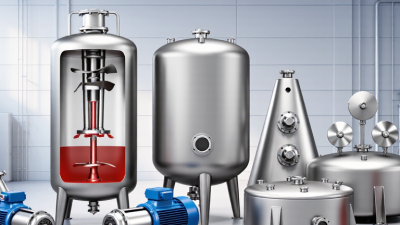
An agitator tank is not simply a vessel with a motor; its geometry determines how fluid moves, heat transfers, and solids remain suspended. For low-viscosity liquids, axial-flow impellers can circulate material from top to bottom. Baffles interrupt swirling and help prevent a deep central vortex. For thicker blends, close-clearance blades sweep near the wall, reducing stagnant layers and aiding heat transfer. Small details matter.
Tank proportions also change the mixing result. A narrow, deep vessel may need a different impeller arrangement from a shallow batch tank. Bottom clearance affects whether settled particles lift into circulation; jacket placement and wall-sweeping action influence temperature uniformity. There is no universal layout.
The U.S. Department of Energy’s 2002 motor-systems assessment estimated that motor systems used about 69% of U.S. manufacturing electricity. That figure is broad, not specific to agitators, but it underlines why motor sizing and operating speed deserve attention.
Design should match the actual duty, including startup viscosity, fill level, and solids content. A setup that works with a full tank may leave dead zones at low fill. Pilot testing can reveal this. It can also expose an awkward assumption: a visually smooth surface does not prove the whole tank is mixed.